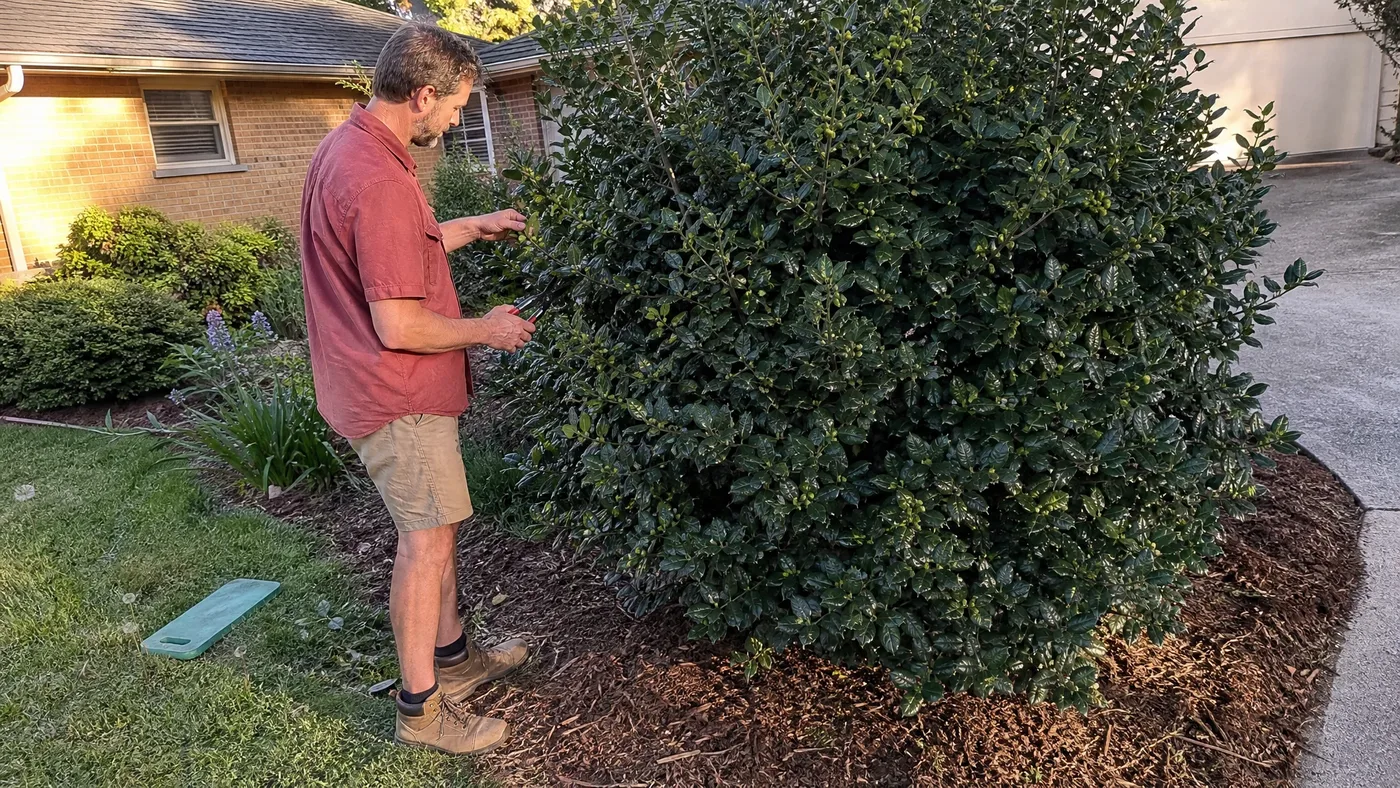
How to Propagate China Girl Holly from Cuttings
You have a healthy China Girl hedge and you want more of it without buying more plants. The rumor on every nursery bench says any holly snip stuck in a pot will root if you just believe in it, and the online photos of a pot full of green cuttings make that look true. The evidence is shakier than those photos suggest.
Doing it badly costs you a season and a pot of brown sticks. Doing it well gives you free, identical plants from a shrub you already know performs. Read on for how to judge the wood, cut and wound the stem, choose a hormone, build a humid chamber, check for roots without wrecking them, and plan for the male plant your new hollies will still need.
Why China Girl Holly Cuttings Fail so Often
Before you touch the pruners, it helps to test the claim that holly roots easily and set expectations you can live with.
Holly is not an easy rooter. Meserve hybrids have a slow growth rate, and that slowness shows up underground too. A cutting can sit for many weeks looking perfectly fine while doing nothing, then turn brown in a few days. The pretty photos are taken at the good moment, and nobody photographs the pots that failed.
We do not have a trustworthy success percentage for this cultivar, and we will not make one up. What we tell customers is to stick more cuttings than the number of plants you want, and to treat every rooted one as a bonus.
The Four Usual Causes of Failure
When cuttings fail, the cause is almost always one of these.
- The wood was too soft or too hard when you cut it.
- The leaves dried out before roots could replace the water they lost.
- The medium stayed too wet and the base rotted.
- You pulled the cutting out to check it too early.
The rest of this guide is built around avoiding those four. Skip the glass of water on the windowsill, too. Water-rooted holly stems form fragile roots that struggle once they meet a real medium.
One of the most common questions we get is whether a hedge clipping will simply take. Sometimes it does. If you need a hedge by a certain year, buying plants already established in containers is the faster route.
Reading the Wood Before You Cut China Girl Holly
Most advice names a date range for semi-hardwood cuttings. We distrust that, because the wood tells you more than the calendar does.
Judging Firmness on the Stem
Semi-hardwood means this year's growth that has finished its spring push and begun to firm up. The base of the shoot should feel stiff and the bark should be turning from bright green toward tan or brown. The tip can still be a little pliable.
Try the bend test on a shoot you can spare. A stem that flops over is still too soft. A stem that snaps cleanly like a dry twig is too hard. You want one that bends a good way, then cracks or springs back.
Choosing the Stock Plant
Pick a shoot from a shrub that is growing well, not one that is struggling. A China Girl with yellowing leaves from poor soil or stress is a bad donor, because a stressed shoot has little stored energy to spend on roots. If the hedge shows chlorosis, fix that first and take cuttings next year.
Take cuttings in the morning, when the stems are full of water, and never after a dry spell. Local climate shifts when the wood firms up, so check with your local extension service for the window in your area. Then keep watching the wood, because a cool or hot year moves the schedule.
If you already shape the hedge each year, see our guide on when and how to prune China Girl holly. Trimmings are only useful as cuttings if they happen to be at the right stage.
Taking and Trimming the Cutting
This is the hands-on part, and clean, quick work counts for more than any special tool.
Making the Cut
Wipe your pruners or knife with rubbing alcohol. Cut a healthy shoot from the current season, taking a piece a few inches long with several leaves and a growing tip. Cut just below a node, the point where a leaf joins the stem, because that is where roots form most readily.
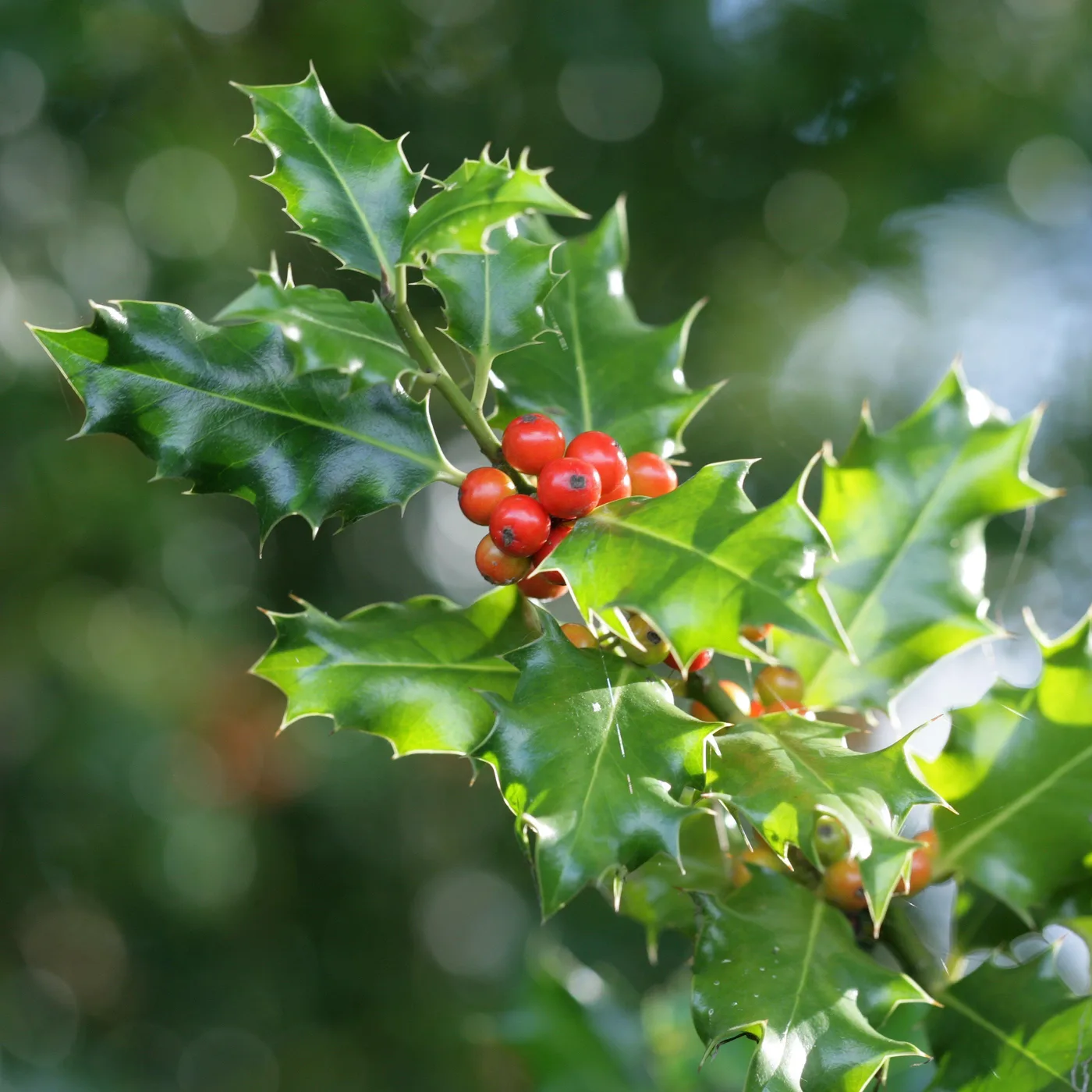
Wear gloves. China Girl's leaves are prominently spine tipped, and a handful of cuttings will find every gap in your sleeves. Drop each cutting straight into a plastic bag with a damp paper towel and keep it in the shade until you are ready to stick it.
Wounding and Stripping
Work at a clean surface, not on the hood of the truck. Strip the leaves from the lower half of the stem, so nothing sits in the medium and rots. Leave the top few leaves in place, since they feed the cutting while it roots.
Then wound the base. Shave a thin sliver of bark from one side, enough to expose the pale tissue beneath, and no deeper. Holly stems are firm and the wound gives roots a larger surface to form from. Do not gouge into the core, because a deep cut is a rot entry point.
Large leaves lose water quickly. Some growers trim them back, but we prefer leaving them whole on a firm stem and relying on humidity instead.
Does Rooting Hormone Earn Its Keep?
Hormone is the most argued-over step in propagation, so here is what the evidence supports and what we tell people to do.
Hormone helps. It tends to speed rooting and make it more even across a batch. It does not rescue a cutting taken from the wrong wood or sitting in a soggy pot. Treat it as an assist, not the main event.
Strength is where the claims get loud. We have no source that proves one strength is best for China Girl, so be skeptical of anyone who names an exact figure. Stronger is not better. Too much burns the cut base and kills the cutting outright. Semi-hardwood holly wants a low to moderate strength labeled for woody cuttings.
How to Apply It
Follow these steps in order.
- Pour a small amount of hormone into a separate dish, so you never dip into the main container.
- Moisten the wounded base of the cutting.
- Roll the base in the powder or gel, covering the wound.
- Tap off the excess, because a thick clump does harm.
- Stick the cutting right away, with a pencil hole made first so the coating is not rubbed off.
Throw out whatever is left in the dish at the end of the session. Old, contaminated hormone is a common reason people think the product did nothing.
Building a Humid Rooting Chamber
A cutting has no roots to drink with, so the air around it has to do the work. Your chamber's job is to hold humidity high while the base stays damp, not soaked.
Choosing the Medium
Use a coarse, sterile mix that drains fast and still holds some moisture. Perlite blended with peat or coarse sand works. Skip garden soil, which carries rot organisms and packs down. Meserve holly does best in slightly acidic, moist, well-drained soils, so a peat-based blend suits it better than a limey mix.
Wet the medium thoroughly and let it drain before sticking. Use a pot with drainage holes, and give each cutting room so the leaves do not touch.
Sealing in the Humidity
Cover the pot with a clear dome or a plastic bag, held off the leaves on a few stakes. This matters more for holly than for soft-leaved shrubs. Those spine tips will pierce plastic that rests on them, and wet plastic against a leaf invites rot.
Set the chamber in bright shade, never direct sun, which will cook it. Open the cover for a few minutes every few days to let in fresh air and check moisture. Mist if the leaves look dry, and remove any leaf that turns black before it spreads.
Gentle warmth under the pot can speed things up, but it is optional. A steady, cool, shaded spot beats an erratic hot one.
Waiting, Checking and Judging Root Growth
Now comes the hard part, which is leaving the pot alone. In our rows, the cuttings that fail are often the ones someone could not stop pulling up.
What Happens Over the Weeks
First the cut base forms a pale, lumpy callus, which is healing tissue, not roots. Roots emerge from the callus or from the wound later. Holly is slow here, so expect many weeks, sometimes stretching through the winter. If a cutting is still green and firm, it is still alive and may still be working.
Checking Without Disturbing
Skip the tug for the first several weeks. Look at the drainage hole instead, where roots will often show first. Later, give one cutting a very gentle tug. Resistance means roots are gripping. If it slides out easily, push it back and wait.
This table shows what common signs usually mean and what to do about them.
| What you see | What it usually means | What to do |
|---|---|---|
| Lumpy pale base | Callus only, no roots yet | Wait and leave it alone |
| Leaves stay green | Cutting is alive but not proof of roots | Keep waiting |
| New growth at the tip | Often stored energy, not roots | Do not trust it until you feel resistance |
| Roots at the drainage hole | Rooted | Begin hardening off |
| Black, soft stem base | Rot | Discard it and lower the moisture |
| Fuzzy mold on lower leaves | Too much humidity, too little air | Remove the leaf and vent the cover |
The most misleading sign is a flush of new leaves. A cutting can push out growth from its own reserves and still have no roots, then collapse when that supply runs out.
Moving Rooted China Girl Holly Cuttings Out
Once you feel resistance or see roots, the plant is not finished. This is where many rooted cuttings are lost, because the roots cannot yet keep up with open air.
Hardening Off
Open the cover a little more each day, then leave it off for longer stretches, over about a week or two depending on how the leaves react. Wilting means you moved too fast, so close it back up. Keep the plants in bright shade throughout.
Potting Up and First-Season Care
Move each rooted cutting into its own pot with a well-drained, moist, slightly acidic mix. Handle it by the leaves or the rootball, never the fragile stem. Our guide on growing China Girl holly in containers and pots covers the grow-on stage.
Water evenly, because a small root system dries out fast, and avoid feeding heavily in the first season. Expect little top growth, since the cultivar is slow even when fully established.
Protect young plants through their first winter, since they have far less root mass than the hedge they came from. Our winter care guide for cold climates covers it, and our guide to transplanting China Girl holly covers the move to its permanent spot.
Why Your Rooted China Girl Holly Still Needs a Male
Here is the part that trips people up after all that effort. A rooted cutting is a clone, so it does not change sex.
Meserve hollies are dioecious, with separate male and female plants. China Girl is a female, so every cutting you take from it is a female too. A hedge made entirely from your own cuttings will have the same problem as the parent. Without pollen, the berries do not form. As the Illinois Extension puts it, fruit will be produced only if a male plant is available to pollinate the females.
Planning Your Planting
Plant a male Meserve holly such as China Boy in the vicinity. The usual rule of thumb is one male for every 3 to 5 female plants, so a hedge of a dozen or so females needs only a few males. Check that a male already stands nearby before you buy one. Our guide on whether China Girl holly needs a male pollinator goes through the detail.
Leave room, too. Cornell says the cultivar grows to 10 feet tall and wide, and that is wider than the species typically gets.
What to Expect From Your China Girl Holly Cuttings
Expect a modest share of your cuttings to root, not a full tray, and expect it to take longer than the rumors claim. The plants that do root are worth the wait, because they match a shrub you already trust. Stick extra cuttings, keep the chamber humid but not wet, and resist checking too early. And plant a male nearby.
China Girl Holly
Nursery-grown China Girl Holly in sizes from 2 GALLON, shipped to your door.
From $87.99
Shop Now →Before a plant leaves us, our growers check the roots, the foliage color and the structure of every plant. As growers with our own farms, we sell only top-quality plants, and that is the standard we try to help you reach with your own cuttings.