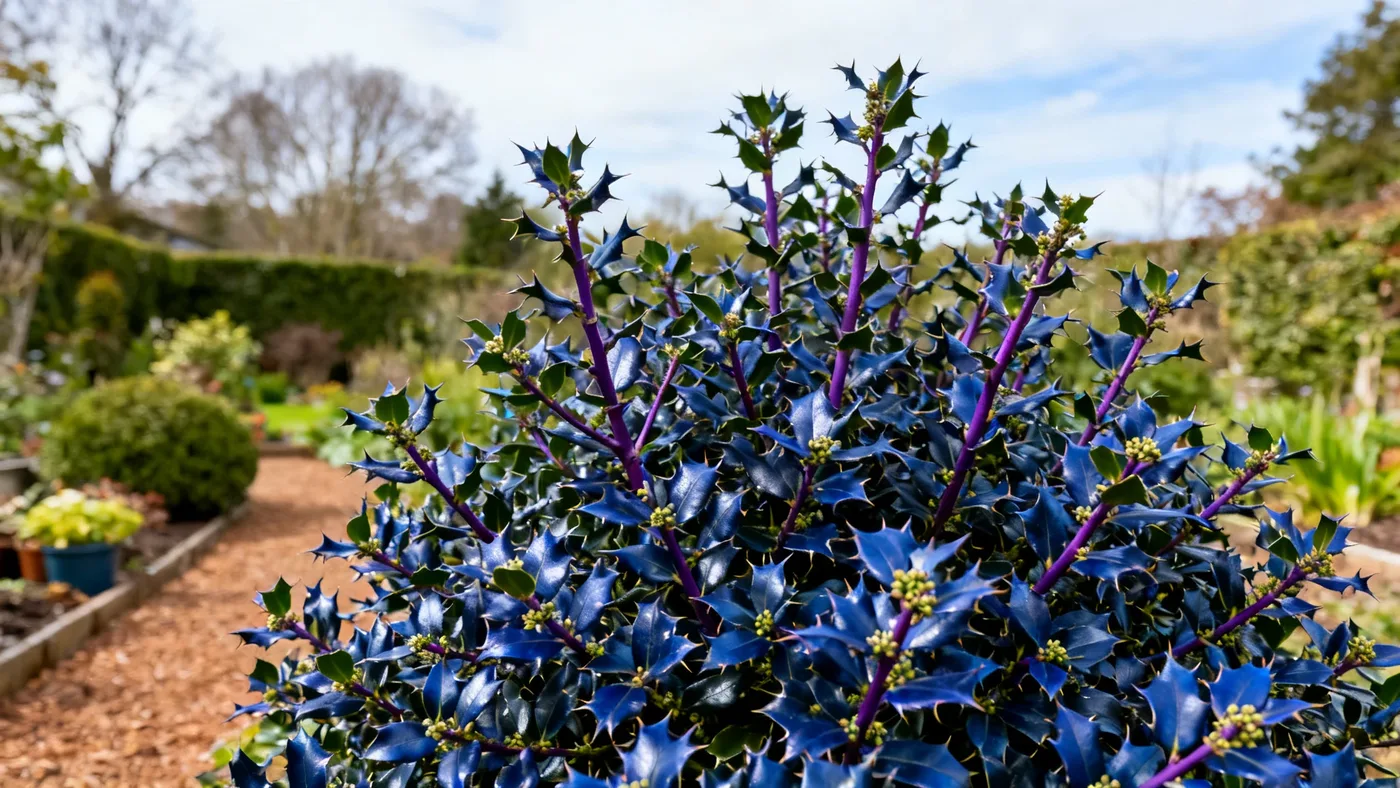
Does China Girl Holly Need a Male Pollinator for Berries?
China Girl Holly produces those striking red berries that brighten your landscape all winter, but here's the catch: this female cultivar cannot produce berries without a male pollinator nearby. If you're wondering why your China Girl Holly looks bare while other hollies in your neighborhood are loaded with color, pollination is almost certainly the reason. This guide answers the questions home gardeners ask most often about getting your China Girl Holly to berry reliably.
Pollination Basics
Does China Girl Holly need a male plant for berries?
Yes. China Girl Holly is a female cultivar of Ilex x meserveae that must be pollinated by a male holly to set berries. Without a compatible male pollinator within reasonable proximity, your China Girl will flower in late spring but produce no fruit. The small white flowers go through pollination in approximately May (timing varies by region), so a male plant in bloom at the same time is essential for berry production.
What is the best male pollinator for China Girl Holly?
China Boy Holly is the ideal match for China Girl, since both are Meserve hybrids bred together as a pair. If you cannot source China Boy specifically, other male Meserve hollies like Blue Prince or Blue Boy can also pollinate China Girl effectively. The key is that the male plant flowers at the same time as your China Girl, which happens in late spring for Meserve varieties.
Can I use a different type of male holly to pollinate China Girl Holly?
While China Girl can technically accept pollen from other male hollies, results are unpredictable and often poor. Male hollies from different species or hybrids may bloom at different times, or their pollen may not be fully compatible with the China Girl's female flowers. For the most reliable berry production, plant China Boy or another Meserve male like Blue Prince specifically chosen for this purpose.
How far apart do China Girl and China Boy need to be planted?
Bees and wind carry pollen, so pollination can occur even when plants are planted 50+ feet apart, though closer spacing improves reliability. For consistent berry production, most growers plant male and female hollies within 30-50 feet of each other. If you have space, placing them within sight of each other (roughly 20-30 feet) is an easy way to ensure cross-pollination without overthinking it.
Can China Girl Holly pollinate itself?
No. China Girl is a female clone that cannot self-pollinate. Even if you trim and bring branches indoors to hand-pollinate, or attempt any other method, a China Girl plant alone will never produce berries. You must have a separate male plant of a compatible species or hybrid.
Location and Growing Conditions
What's the best location for China Girl Holly to produce lots of berries?
Full sun is critical for maximum berry production. While China Girl Holly tolerates part shade and can survive in shadier spots, berry set drops significantly in partial shade. Plant your female (and male pollinator) in a location that receives full sun to get the dense foliage and abundant berries this cultivar is known for.
Will my China Girl Holly produce berries in shade?
Possibly, but not reliably. Shade reduces flowering, which in turn reduces the number of berries that can form even if pollination occurs. If your China Girl is in part shade, move it to a sunnier spot or supplement your landscape design with shade-tolerant companion plants nearby while the holly gets what sun is available.
Does China Girl Holly need special soil for berry production?
China Girl Holly grows in well-drained, humusy soil with a pH range of roughly 5.0 to 6.5. Acidic to neutral soil supports healthy foliage and flowering, which is the foundation for berry production. As long as drainage is decent and the soil is not strongly alkaline (which can cause chlorosis), your China Girl will flower and set berries reliably. For specific guidance on soil amendments, refer to our complete growing guide.
Timing and Bloom Cycles
When does China Girl Holly bloom?
China Girl Holly flowers in late spring, approximately in May, though timing varies by region and growing conditions. The flowers are small and white, and bloom at the exact same time that male Meserve hollies like China Boy are in flower. Synchronous bloom timing is why the male and female were bred together as a pair.
When can I expect to see berries on my newly planted China Girl Holly?
If you plant a young China Girl Holly from a nursery (typically in a #1 or #3 container), you may see flowers and some berries within the first year or two if a compatible male is nearby. However, the first few years of any young shrub focus on root establishment, so berry production ramps up as the plant matures. By year 3-5, with good care and a male pollinator present, expect reliable berry production.
How long do the berries stay on the plant?
The bright red berries persist through the winter, providing color and food for songbirds until spring growth begins. This extended winter interest is one of the major reasons gardeners choose China Girl Holly. The longer the berries stay on the plant, the more wildlife benefit and visual appeal your landscape gets.
Care and Pruning
Does pruning China Girl Holly affect berry production?
Heavy pruning before or during flowering can remove flower buds and reduce that year's berry set significantly. The best time to shape China Girl Holly is in late winter to early spring, before new growth begins, or lightly after berries fade in late winter. Avoid shearing your plant heavily during the growing season if you want to maintain berry production.
Will fertilizer help my China Girl Holly produce more berries?
Light annual feeding in early spring with an acid-loving shrub fertilizer supports overall plant health, which indirectly helps with flower and berry production. Overfeeding can actually promote excessive foliage growth at the expense of flowers. A balanced approach (one modest feeding in spring, then let the plant settle) is better than heavy fertilizing.
How much water does China Girl Holly need to flower and fruit?
China Girl Holly prefers consistent moisture and requires regular watering until established, then becomes moderately drought tolerant. Stress from under-watering can reduce flowering, so consistent moisture supports better bloom and berry set. For detailed guidance on your specific watering schedule, see our watering guide.
Common Problems and Troubleshooting
Why is my China Girl Holly not producing berries even though I have a male holly nearby?
Several factors could prevent berry production despite having a pollinator: insufficient light (China Girl needs full sun for best results), poor pollinator compatibility (only Meserve males like China Boy work reliably), or adverse weather during the brief bloom window in May that prevented bees from visiting flowers. Also check that your "male" plant is actually male; some nurseries mislabel plants. If you're unsure, verify the cultivar name (China Boy, Blue Prince, or Blue Boy) with your nursery.
My China Girl Holly bloomed beautifully but produced no berries. What went wrong?
If flowers appeared but no berries set, the most common cause is lack of pollination. This happens when no compatible male is flowering at the same time, or when cold, rainy weather during bloom (May) kept bees away from flowers. Another possibility is that the frost damaged the developing ovaries after pollination occurred, though this is less common. Plant a male pollinator such as China Boy for next season to ensure cross-pollination.
Is China Girl Holly different from Blue Princess Holly?
Yes. China Girl Holly (Ilex x meserveae 'China Girl') and Blue Princess are both Meserve hybrids, but they are different cultivars with distinct characteristics. China Girl is specifically bred to pair with China Boy. Blue Princess can be pollinated by Blue Prince or Blue Boy. While they look similar and occupy the same landscape role, using matched pairs ensures reliable berry production.
Will birds help spread seeds and create volunteer China Girl plants?
While birds do eat and disperse holly berries, China Girl Holly's seed fertility is quite low as a sterile hybrid, which limits volunteer spread. You might see occasional seedlings nearby if birds process the berries, but the likelihood is small. This low-invasiveness trait is actually a benefit if you want to keep the plant confined to its planting location.
Can I grow China Girl Holly in a container if I don't have ground space?
Yes, China Girl Holly is suitable for containers, especially when young and sold in #1 or #3 containers from the nursery. However, containers require more frequent watering and the plant eventually outgrows them. If your plan is permanent container growing, expect the plant to reach about 6-8 feet wide and 8-10 feet tall at maturity, so choose a large pot and plan for eventual transplant to the ground if possible. A male pollinator would still need to be nearby (even in a neighboring container) for berries.
Quick Reference: China Girl Holly Pollination Checklist
| Factor | Requirement for Berries |
|---|---|
| Male pollinator | Essential; China Boy or other Meserve male |
| Distance between male and female | Within 30-50 ft preferred; up to 100+ ft possible |
| Bloom time synchronization | Late spring (May); both plants must flower together |
| Sunlight for China Girl | Full sun for maximum berry production |
| Soil pH | Acidic to neutral, approximately 5.0-6.5 |
| Drainage | Well-drained soil required |
| Watering | Consistent moisture until established, then moderate |
| Pruning for berries | Light or shape after bloom fades; avoid heavy pruning in spring |
| Years to reliable berry production | 3-5 years after planting a young nursery plant |
| Winter interest duration | Berries persist through winter into spring |