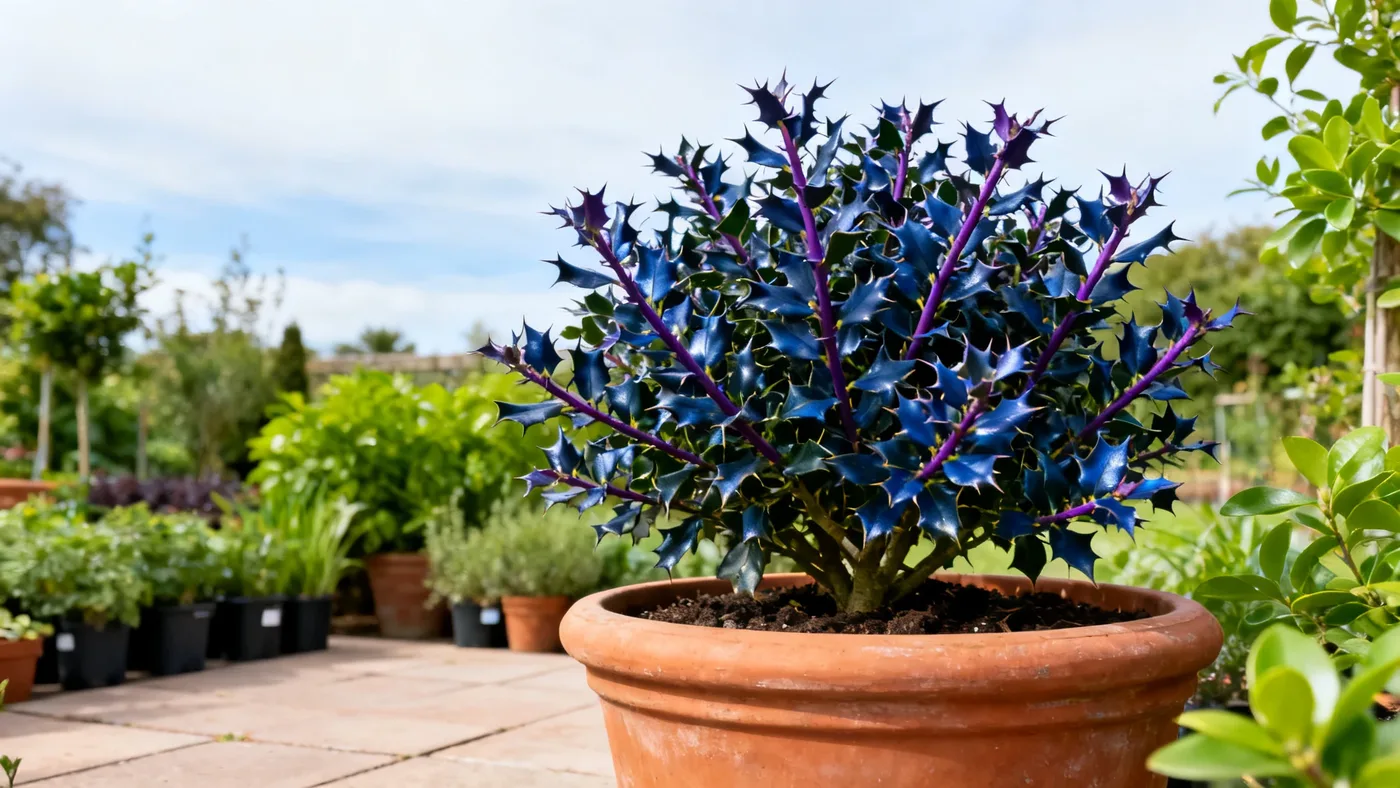
Growing China Girl Holly in Containers and Pots
China Girl Holly grows beautifully in containers, making it an excellent choice for patios, decks, and entryways where you need year-round structure and winter color. A young potted China Girl Holly (typically sold in #1 or #3 containers) can thrive outdoors for years, producing glossy dark foliage and bright red berries if a male pollinator like China Boy Holly is nearby. This guide walks you through selecting the right pot, preparing soil, planting, and maintaining your container-grown holly so it stays healthy and ornamental season after season.
What You'll Need
- Container: at least 12 inches deep and 12 inches wide to start; 18-inch containers or larger for long-term growth
- Potting soil: acid-loving or ericaceous blend (pH 5.0 to 6.5), or a mix of peat moss, pine bark, and perlite in equal parts
- Drainage material: gravel or broken terracotta shards for the container bottom
- Mulch: 1 to 2 inches of shredded pine bark or hardwood chips
- Evergreen or acid-loving shrub fertilizer (slow-release, balanced NPK or slightly higher nitrogen)
- Pruning shears
- Watering can or soaker hose
- Small stakes and soft ties (optional, for young plants)
Selecting the Right Container
Container size matters more than material. Start with a pot at least 12 inches in diameter and 12 inches deep. This gives the root system room to develop without retaining so much moisture that it suffocates the roots. As your China Girl Holly grows over 3 to 5 years, you can transplant it into progressively larger containers, stepping up to 15, 18, or even 20-inch pots. Terra cotta and ceramic both work well; terra cotta breathes and dries faster, which can be an advantage in humid regions or poorly draining soil mixes, while ceramic holds moisture longer and suits drier climates better.
The most important feature is drainage. Ensure the container has at least one drainage hole at the bottom. If you are using a decorative pot without drainage, place a nursery pot inside it rather than potting directly into the ornamental container.
Preparing Soil and Container
China Girl Holly prefers acidic to neutral soil with a pH between 5.0 and 6.5. In containers, use an acid-loving shrub mix or ericaceous potting soil. If you prefer to mix your own, combine equal parts peat moss (or coconut coir), pine bark, and perlite. This blend holds enough moisture to keep roots hydrated while staying loose enough to prevent waterlogging.
Before filling your container, place a 1-inch layer of gravel or broken pot shards over the drainage hole. This prevents soil from washing out while water drains freely. Fill the container about two-thirds full with your prepared soil mix.
Planting Your China Girl Holly
Nursery-grown China Girl Holly plants are usually sold in #1 or #3 containers. A #1 container (about 7 inches across) fits into a 12-inch pot with room for soil, while a #3 shrub (typically 8 to 10 inches tall) needs at least a 15 to 18-inch pot to give its root ball space to expand.
Follow these steps when planting:
- Water the nursery pot thoroughly an hour before planting to hydrate the soil and roots.
- Remove the plant from the nursery pot by gently tipping it sideways and sliding the root ball out. If it is tight, run a knife around the inside edge of the pot or flex the pot to loosen it.
- Loosen the outer roots with your fingers, working gently to separate any that are circling the root ball. This encourages them to grow outward into the new soil.
- Set the root ball into the prepared container at the same depth it was growing in the nursery pot. The top of the root ball should be level with or slightly below the rim of the new container.
- Fill in around the root ball with your soil mix, pressing gently to eliminate air pockets. Do not compact the soil too firmly.
- Water thoroughly until water drains from the bottom of the container. This settles the soil and removes any remaining air gaps.
- Add 1 to 2 inches of mulch around the base, keeping it 1 inch away from the stem to prevent rot.
Light and Placement
China Girl Holly performs best in full sun to part shade, with full sun producing the densest foliage and most abundant berries. If you are growing your holly in a zone from 5 to 9 (the plant's hardiness range), choose a location that receives at least 4 to 6 hours of direct sun daily, ideally in the morning. Morning sun helps dry dew and reduces fungal leaf spot risk.
If you live in warmer zones (8 to 9), afternoon shade during the hottest months (July and August) can prevent leaf scorch and reduce water stress. In colder zones (5 to 6), afternoon sun exposure helps the plant harden off before winter.
Avoid placing containers in windy areas where winter winds can desiccate the evergreen foliage. In exposed locations, winter leaf scorch may occur; if this happens, prune damaged growth in early spring after the danger of hard frost has passed.
Watering and Drainage
Potted plants need more frequent watering than in-ground specimens because containers dry out faster. China Girl Holly prefers medium, consistent moisture. Check the soil 2 to 3 inches deep with your finger: if it feels dry at that depth, water thoroughly until it drains from the bottom.
In spring and early summer, this may mean watering once or twice a week. During hot, dry spells, you might need to water every 3 to 4 days. In fall and winter, reduce watering frequency, but do not let the container dry out completely. Evergreens transpire moisture even in dormancy.
Drainage is critical. Soggy soil invites root rot and fungal problems. If water sits on the surface or drains very slowly, your soil mix may be too heavy. Repot into a fluffier blend with more perlite or pine bark.
Fertilizing Container-Grown Holly
Potted plants have less access to nutrients than those in the ground, so light, regular feeding helps maintain vigor. In early spring (late February to early March, depending on your zone), apply a balanced, slow-release evergreen shrub fertilizer. Follow the package rate, typically using 1 to 2 tablespoons per 10-inch pot.
Avoid over-fertilizing. Excess nitrogen can produce soft, lush growth that is more vulnerable to pests and winter damage. A single annual feeding is usually sufficient. If your holly looks pale or growth slows, you can apply a light dose again in mid-summer, but most growers find one spring application adequate.
Pruning and Shaping
China Girl Holly naturally forms an upright, rounded shape. Light pruning in late winter to early spring before new growth keeps the plant tidy and encourages branching. Shape in late winter or after the berries fade in winter.
For container-grown plants, keep pruning moderate. Heavy pruning removes flower buds and reduces berry set that year, so prune only to remove dead or diseased stems, to shape the plant lightly, or to remove crossing branches. Once the plant reaches the size you want, an annual light trim in late winter is usually all you need.
Container Care Through the Seasons
Spring
In spring, apply your annual fertilizer feeding in early March (or when forsythia blooms, a common marker). Check the soil moisture as temperatures warm and adjust watering frequency as growth accelerates. In late spring (May, depending on zone), your China Girl Holly will flower with small white blooms that attract bees. These flowers are inconspicuous, but they are essential for berry production if a male pollinator is nearby.
Summer
Summer is the peak growing season. Water regularly, more frequently on hot days. Watch for pests like spider mites, scale, and holly leafminer, especially in warm climates. Spray early in the morning if you notice stippling on leaves or scale insects on stems. Well-watered plants are more resistant to pests than drought-stressed ones.
Fall
As temperatures cool in fall, reduce watering slightly but keep soil consistently moist. If you live in zones 5 to 7, move the container against a south or west-facing wall in late October to maximize radiant warmth and minimize winter wind exposure. In zones 8 to 9, most hardy containerized plants remain outside without extra protection.
Winter
Once established, China Girl Holly is moderately cold hardy in zones 5 to 9, but containerized plants are more vulnerable to extreme cold than in-ground specimens because the root system is above ground and exposed. In zones 5 to 6, consider wrapping the pot with burlap or moving it to a sheltered porch or unheated greenhouse during the coldest weeks. Water sparingly during true dormancy (December through February), but do not let the soil dry out completely.
Common Container Problems and Solutions
Chlorosis (yellowing foliage with green veins) occurs in alkaline soil. Ensure your potting mix is truly acid-loving (pH 5.0 to 6.5). If chlorosis develops, repot into fresh, acidic soil or apply a chelated iron spray in spring.
No berries appear if there is no male pollinator nearby. China Girl Holly is female. To produce red berries, plant a male pollinator like China Boy Holly in a nearby container or in the garden within 30 to 50 feet.
Winter leaf scorch shows as brown or bleached foliage edges in exposed, windy sites. Move the container to a more sheltered location, or wrap it with burlap to block harsh winds.
Root rot develops in waterlogged soil. If the plant wilts despite moist soil, it may have root rot. Repot into fresh, well-draining soil after removing black, mushy roots.
Spider mites and scale can infest container-grown hollies indoors or in warm climates. Spray affected plants with horticultural oil in early morning or late evening, following label directions.
When to Move Your Holly to the Ground
China Girl Holly reaches a mature height of 8 to 10 feet and a width of 6 to 8 feet over many years. A containerized plant grows slowly, roughly 6 to 12 inches per year once established. If you want your holly to reach full size, plan to transplant it to the garden after 3 to 5 years in a container. This works best in spring (March or April) or early fall (August or September), giving the plant time to establish roots before temperature extremes.
Transitioning a container plant to the ground: Gradually acclimate it to direct ground soil over 2 to 3 weeks by mixing ground soil into its potting mix. This helps roots adjust to the different texture and nutrient profile. Plant in a hole as deep as the root ball and 1.5 times as wide. Water thoroughly after planting.
Quick Reference: Container Growing Checklist
| Task | Timing | Notes |
|---|---|---|
| Planting | Spring or early fall | 12-inch minimum pot; well-draining acidic soil (pH 5.0-6.5) |
| Watering | Spring and summer: 2-3x weekly; fall and winter: weekly or less | Keep soil consistently moist, never soggy. Check 2-3 inches deep before watering. |
| Fertilizing | Early spring (late February to March) | Single annual application of slow-release evergreen shrub fertilizer |
| Pruning | Late winter to early spring | Light shaping only; heavy pruning reduces berries |
| Sunlight | Year-round | 4-6 hours direct sun minimum; full sun for best berries and foliage |
| Winter protection | Zones 5-6 in December through February | Move pot to sheltered spot or wrap with burlap in harsh wind |
| Upsizing container | Every 3-5 years | Move to next size (e.g., 12-inch to 15-inch to 18-inch) when roots fill pot |
| Ground transplant | After 3-5 years or when height reaches preferred size | Acclimate roots to garden soil over 2-3 weeks; plant in spring or early fall |
For more detailed care information beyond the container environment, see our complete China Girl Holly care guide. Container growing is an excellent way to enjoy this evergreen holly's winter beauty and glossy foliage for years before committing it to the landscape.