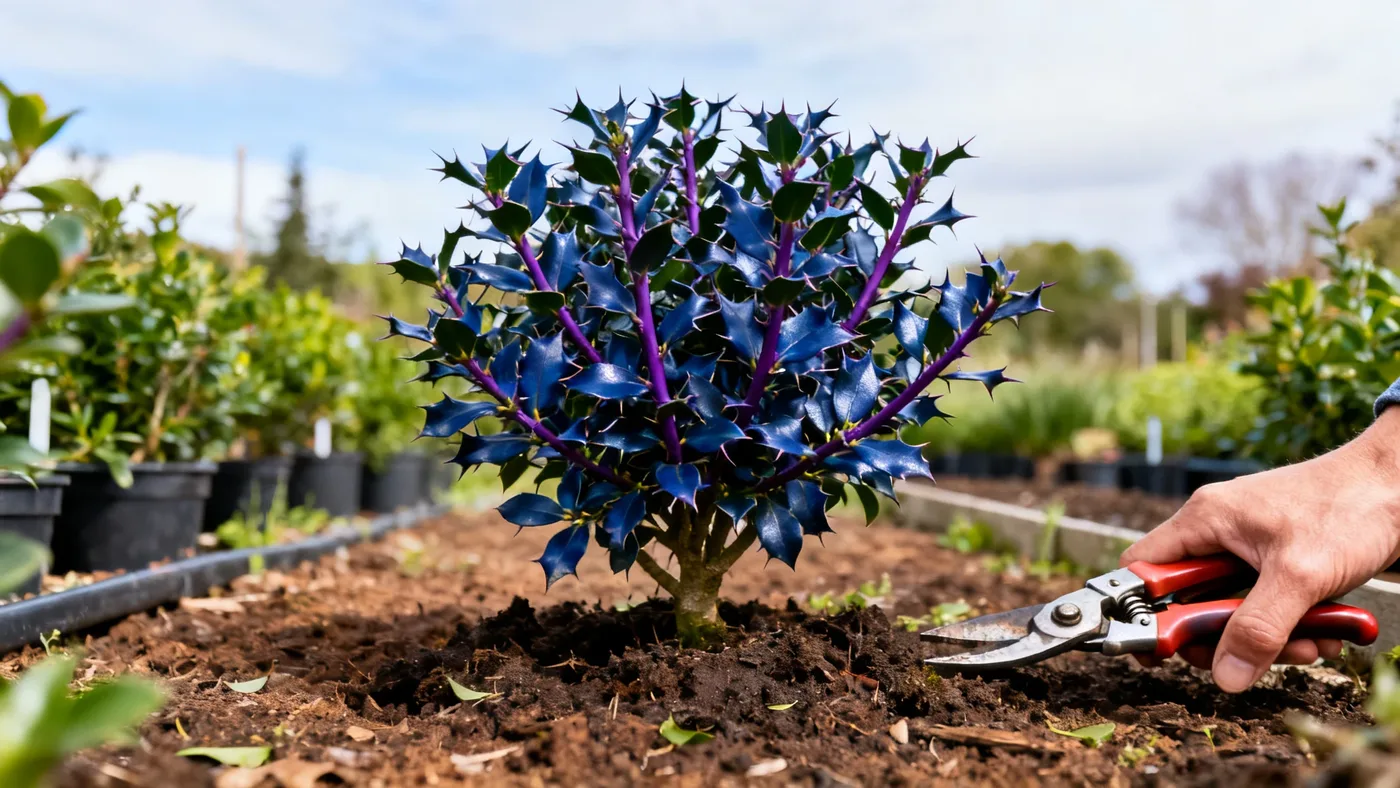
When and How to Prune China Girl Holly the Right Way
It's October, your China Girl Holly is loaded with red berries, and a few branches are poking out of the shape you want. You reach for the shears. Stop for a minute, because this is the most common way we see people lose next year's fruit.
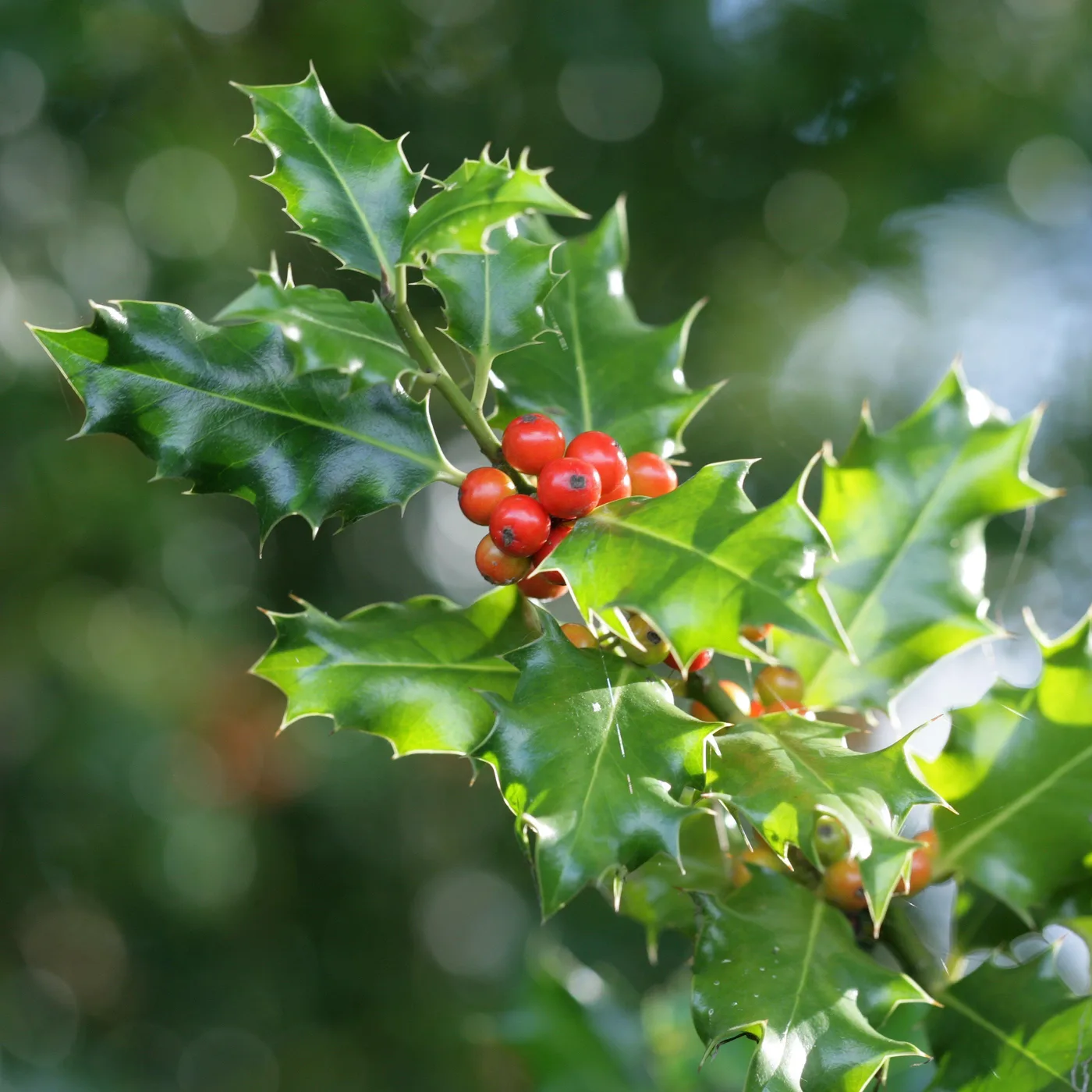
China Girl is a female holly, and a cut in the wrong month takes off the wood that carries next spring's flowers. Cut in the right month and the same shrub fills in dense and glossy, with plenty of berries to follow. This guide covers everything you need to know about pruning China Girl Holly, from the timing mistake we see most often to the right cuts for a hedge, a lone specimen and an overgrown plant. We also cover what recovery should look like afterward.
The Most Common China Girl Holly Pruning Mistake
The call we get most often goes, "I trimmed it and now I have no berries." The cause is almost always the calendar, not the cut itself.
Timing is everything with China Girl Holly. Prune at the wrong time and you'll sacrifice that year's berry crop, but prune at the right time and you'll encourage dense new growth that flowers in spring and fruits by fall.
Avoid pruning from late spring through summer. During these months, the plant is actively growing and flowering, and cutting into new branches removes developing flower buds. Heavy summer pruning can eliminate berries for that entire year.
You may have heard that spring-flowering shrubs should be pruned right after they bloom. We don't follow that advice for China Girl. A cut in May or June takes off the new shoots that are carrying the flowers, so we keep the shears put away until late winter.
China Girl Holly is a female cultivar that produces berries only if a male China Boy Holly or other male Ilex meserveae is growing nearby to pollinate it. Heavy pruning removes flower buds, which directly reduces that year's berry set. If berries are important to you (and they should be, since birds rely on them for winter food), prune lightly and avoid late-spring or summer cuts.
If you never pruned and still got no berries, look for a male plant before you blame your cuts. Our guide on whether China Girl needs a male pollinator explains what to check.
When to Prune China Girl Holly
China Girl gives you two safe windows each year, and both fall in late winter. Pick one and leave the rest of the calendar alone.
The ideal window for pruning China Girl Holly is late winter to early spring, roughly February through March depending on your zone. This is before new growth flushes but after the worst of winter cold has passed. At this stage, you can shape the plant without removing flower buds, since flower buds haven't fully formed yet.
You can also prune lightly after berries fade in late winter. This is gentler on berry production because you're removing old, finished wood rather than dormant flower buds. Many gardeners prefer this second window if they want to preserve as much fruit display as possible.
China Girl is hardy to USDA Zone 5. At the cold end of that range, in zones 5 and 6, wait for late February or March, because an early cut can force tender new growth before the last hard freeze. In warmer zones you have more flexibility in timing, but still skip mid-summer pruning.
Tools and Materials You'll Need
China Girl's leaves are prominently spine tipped, so gear up before you make the first cut. Gather these tools first.
- Hand pruners (bypass style, sharp): for branches up to 1/4 inch thick
- Loppers: for branches 1/4 to 1 inch in diameter
- Pruning saw: for larger, thick wood or dense interior cuts
- Hedge shears: if you're shaping a formal hedge or screen
- Leather gloves: China Girl Holly's spiny leaves can draw blood quickly
- Safety glasses: small twigs flick up when cut, especially on mature plants
- Rubbing alcohol or 10% bleach solution: for disinfecting tools between cuts (optional but recommended to reduce disease spread)
Sharp tools make cleaner cuts that heal faster. Dull shears tear bark and leave ragged edges where fungal diseases can enter. Take 10 minutes before you start to sharpen pruners and loppers.
Step-by-Step: Pruning China Girl Holly
Work through these five steps in order, in late winter, and stop whenever the plant looks balanced. Most plants need less cutting than you expect.
Step 1: Assess the Plant
Walk around your shrub and mark the branches that need to go. Look for dead wood (branches with no green foliage), crossing branches that rub against each other, and growth that extends beyond the shape you want. China Girl has a compact, upright-rounded habit, so you are mainly refining, not drastically reshaping.
Step 2: Remove Dead and Diseased Wood
Cut all dead branches back to live wood. Dead branches look gray or brown and snap easily when you bend them. Cut just above the branch collar (the swollen area where a branch meets the main trunk). For diseased branches, cut at least 6 inches below the visible damage and dispose of the branches in the trash, not your compost pile.
Step 3: Thin Interior Growth
Remove every third or fourth interior branch to open up the canopy and allow air and light into the center. This reduces disease pressure and encourages strong new growth. Start at the bottom and work upward. China Girl Holly's dense foliage can trap moisture and create fungal problems if there's no air circulation.
Step 4: Size Down as Needed
If your China Girl Holly has outgrown its space, cut the tallest stems back to the next lateral branch below. Plan for a mature size of about 10 feet tall and wide. If you're aiming for a 6-foot hedge, cut the top back to that height, sloping slightly narrower at the top than the base. The angled top sheds snow and rain better and lets light reach lower branches. For more on how big it gets, see our China Girl size guide.
Never remove more than one-third of the plant's total volume in a single year. Cutting too much triggers stress and weak regrowth.
Step 5: Make Final Cuts
Step back and look at the overall shape. Make a few final cuts to balance the silhouette. China Girl has a slow growth rate, so what you cut stays cut for a while. Take off less than you think you need on the first pass.
Pruning for Different Goals
Your goal sets how hard you cut. A hedge takes a firm hand, and a specimen takes almost none.
For a Formal Hedge or Screen
If you're growing China Girl as a privacy hedge or windbreak, space plants 6 to 8 feet apart and shear once in late winter. Always cut to a slight taper (wider at the base, narrower at the top). This holly tolerates hard shearing well and produces dense branching. A second light tip trim in early June gives a tidier line, but it costs you berries, so we skip it unless the look of the hedge matters more to you than the fruit.
For a 6-foot hedge, you'll need to cut the top back to height each spring and thin the sides gradually over 2 to 3 years to build the dense form you want. Don't rush it.
For a Specimen Shrub
If you're growing China Girl as a single, unpruned specimen in a landscape, prune very lightly. Remove only dead wood and one or two crossing branches in late winter. This plant's compact, upright-rounded form is attractive on its own, and minimal pruning keeps berry production at its peak. In our rows, the plants we leave alone are the ones that fruit heaviest. If you prefer a tree shape, you can limb up the lower branches into a single trunk.
More China Girl Pruning Mistakes to Avoid
Bad timing is the big one, but these habits also cause trouble. Check your own routine against the list.
- Cutting too much too fast: Removing more than one-third of the plant's volume shocks it and triggers weak, lanky regrowth. Space major cuts across 2 to 3 years if you need to reduce size significantly.
- Pruning in summer: This removes developing flower buds and eliminates berries for that year. Stick to late winter or just after berries fade in late winter.
- Shearing the entire plant into a ball or cube: This looks artificial and removes more buds than necessary. Pruning a few branches selectively looks better and keeps the plant healthier.
- Cutting stems flush to the trunk: Always cut just above an outward-facing bud or branch. Flush cuts leave a wound that doesn't compartmentalize well.
- Leaving stubs: Stubs (cuts that dangle above any branch) don't heal and invite disease. Cut all the way back to a branch or bud.
- Ignoring dull blades: Dull tools crush cells and make brown, ragged cuts that are slow to heal and prone to fungal entry.
What to Expect After Pruning
Use this section to tell normal recovery from a real problem. Slow and steady is normal for this plant.
After pruning, China Girl Holly will take 6 to 8 weeks to show significant new growth. You'll see small green shoots emerging along cut branches first, then branching will thicken. By late spring, the plant will look fuller and denser than before.
If you pruned in late winter, the white to pinkish-white flowers will still appear in spring on branches you didn't cut, and berries will follow in fall if pollination occurred. If you pruned very lightly, berry production may be nearly normal. After a heavy cut, expect a thinner crop that year and fuller fruiting the year after.
Don't expect bare spots to fill in within weeks. China Girl is a slow grower, so a 6-inch cut will take the rest of the season to grow back and thicken, but it will fill in.
If leaves turn yellow after you prune, don't blame the cuts first. China Girl wants slightly acidic soil, and yellowing is more often a soil pH or drainage problem than a pruning one. Our guide to common China Girl problems walks you through the diagnosis.
Ongoing Maintenance After the First Year
After the first year of pruning, China Girl Holly needs only light annual or biennial maintenance. Light pruning every other year keeps it neat and dense without sacrificing too much fruit. Most home gardeners prune once in late winter and call it done.
If you're maintaining a hedge, plan on one shearing each late winter. Add a light trim in early June only if you accept fewer berries. This keeps the hedge tight and attractive without the shock of heavy annual cutting.
For more details on year-round care, including watering, soil needs, and fertilizing, see our complete China Girl Holly growing guide.
China Girl Pruning Schedule and Checklist
Use the table below to match the season to the type of cut and its cost to your berries.
| Timing | Pruning Type | Impact on Berries |
|---|---|---|
| Late winter to early spring (Feb-Mar) | Shaping, thinning, sizing | Minimal loss, flowers still form on unpruned branches |
| Just after berries fade (late winter) | Light maintenance, removal of old wood | Least impact, you're removing finished fruit |
| Summer (avoid) | Any pruning | High loss, flower buds removed |
| Fall and early winter (avoid) | Heavy cuts | Tender new growth exposed to frost, risk of winter damage |
Run through this checklist before and after each pruning session.
- Wait until late winter to early spring (before new growth flushes)
- Sharpen all tools before starting
- Wear leather gloves and safety glasses
- Remove dead, diseased, and crossing branches first
- Thin interior growth to improve air circulation
- Cut no more than one-third of the plant in one year
- Avoid pruning from late spring through summer
- If berries matter, prune lightly and time it early (late winter)
- Step back and assess shape before making final cuts
- Expect new growth within 6 to 8 weeks
Prune Late, Prune Light: Keeping Your China Girl Fruiting
The rule that protects your berries is simple. Cut in late winter, cut lightly, and keep the shears away from the plant from late spring through fall. Thin the interior for air, size the top down in small steps, and let the slow growth do the rest.
China Girl Holly
Nursery-grown China Girl Holly in sizes from 2 GALLON, shipped to your door.
From $87.99
Shop Now →On our farms we give China Girl slightly acidic, moist, well-drained soil and trim it only in late winter. We're a small business of growers, and we raise and sell top-quality shrubs from our own fields, so these are the same habits we use on our own plants.