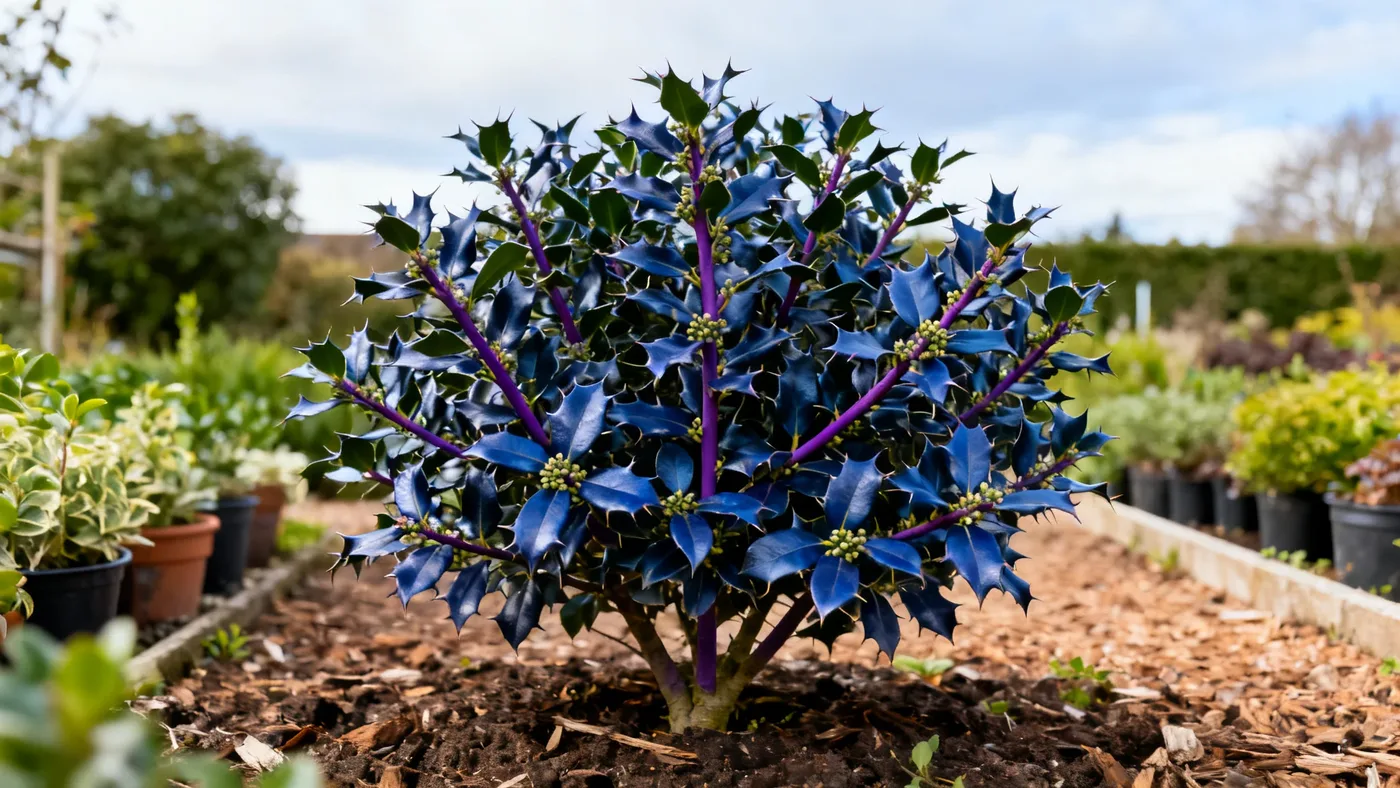
Winter Care for China Girl Holly in Cold Climates
China Girl Holly thrives in USDA zones 5 through 9, which means it can handle genuine cold. But hardiness is not the same as carefree. Winter in harsh climates brings desiccation, wind burn, and fluctuating temperatures that challenge even tough shrubs. The difference between a shrub that shrugs off January and one that emerges spring-burned is preparation, and preparation starts weeks before frost arrives.
This guide walks you through every step of winter protection, from soil conditioning in fall to spring recovery checks. Whether you're in zone 5 where temperatures drop to minus 20 degrees Fahrenheit or zone 6 where erratic freeze-thaws are the real problem, the same core practices will keep your China Girl Holly dense, green, and berry-laden come spring.
Why Winter Care Matters for China Girl Holly
China Girl Holly's glossy evergreen leaves are beautiful in winter, but that glossy surface is also a vulnerability. Winter winds desiccate foliage by evaporating moisture faster than roots can replace it, especially when the ground is frozen and water is locked away as ice. A shrub planted in full sun on an exposed northwest-facing slope can lose moisture three times faster than one tucked into a sheltered site.
The other culprit is winter leaf scorch. This is not frost damage per se. It's a browning or bleaching of foliage caused by the combination of bright winter sun, subfreezing temperatures, and wind. The leaves look scorched in spring, and damaged areas never green up again. Affected foliage usually sheds by midsummer, but it's unsightly and reduces the plant's ornamental value.
Preventive care now avoids these problems entirely. You're not trying to make China Girl Holly survive winter. It will do that on its own. You're protecting it from cosmetic damage and stress that weakens growth the following season.
Understanding Winter Stress in China Girl Holly
Cold hardiness in the USDA zone sense refers to the lowest temperature a plant survives at rest. China Girl Holly survives zone 5 winters (minus 20 to minus 10 degrees Fahrenheit). That's genuine cold-hardiness. But survival and thriving are different. A shrub can survive a harsh winter and still emerge weakened, brown, or winter-burned.
Desiccation happens when water loss exceeds water uptake. In winter, evergreen foliage continues to transpire even though roots cannot absorb water from frozen soil. This is especially severe in shrubs planted in sandy or gravelly soil with poor water retention. A layer of snow can actually help by insulating the root zone and reducing soil frost depth. Uncovered plants in areas with little snow cover face more stress.
Wind is the hidden multiplier. A still, sunny winter day at 15 degrees Fahrenheit is far less damaging than a 25-degree-Fahrenheit day with 20-mile-per-hour winds. Wind strips moisture from foliage and accelerates desiccation.
Tender new growth in fall is also at risk. If your China Girl Holly produces a flush of new tender shoots in September or October, a hard freeze before that tissue toughens can kill the new stem tips. This won't kill the plant, but it sets back growth.
Materials You'll Need
Winter protection is low-cost. Most gardeners already have these items on hand.
- Garden hose and water source (for fall watering)
- Organic mulch (shredded bark, wood chips, or aged compost), 3 to 4 cubic feet per shrub
- Burlap or horticultural shade cloth (for exposed plants)
- Stakes or wooden dowels (to secure burlap)
- Pruning shears (sharp, for late-winter pruning)
- Work gloves (holly leaves are spiny)
- Rope or zip ties (for securing protective wrapping)
For severely exposed sites, consider anti-desiccant spray (a wax-based product applied in late fall that reduces water loss). It's optional but valuable in zone 5 or on wind-swept exposures.
Step-by-Step Winter Protection Guide
Begin this process in mid-October. Do not wait until a hard freeze arrives. Early autumn is when you assess the site, adjust watering, and prep the shrub.
Step 1: Assess the Planting Site
Walk around your China Girl Holly and observe the exposure. Which direction does it face? How much sun? Is there wind funneling through that spot in winter? If the shrub is on the northwest side of a building or fence, or on a ridge where wind accelerates, it's exposed. If it's tucked against a south-facing wall or surrounded by larger shrubs, it's sheltered.
Exposed plants need more protection. Sheltered plants may need minimal help beyond mulch.
Step 2: Water Thoroughly Before Ground Freeze
In late September and again in mid-October, water your China Girl Holly deeply. A thorough soaking down to 12 inches fills the soil profile before frost seals it. Water on a dry day with temperatures above 50 degrees Fahrenheit so the water can percolate into the soil.
Established shrubs need roughly 1 inch of water per week during the growing season. In late fall, give it 1 to 1.5 inches as one deep watering. If rain provides that water, no supplemental watering is needed. But if your fall has been dry, do not skip this step. A well-watered root zone faces less desiccation stress in winter.
Step 3: Apply Mulch Around the Base
After the ground cools but before hard frost, spread 3 to 4 inches of organic mulch in a circle around the shrub. Keep mulch 4 to 6 inches away from the stems to avoid crown rot. The mulch insulates the root zone and moderates soil temperature swings.
Use shredded bark, wood chips, or aged compost. Fresh manure, peat moss, and other materials that compact or lock up nitrogen are not ideal. Mulch also helps retain soil moisture, which is especially valuable in areas with little snow cover.
Step 4: Prune Lightly Before Winter (Optional)
Late winter to early spring is the traditional time to prune. But if your China Girl Holly is leggy, overgrown, or crowding nearby plants, a light shaping in late October will not harm it. Remove crossing branches, dead twigs, and any diseased wood. Do not do heavy pruning. Avoid removing the central leader or shearing the plant hard. Light pruning reduces wind resistance and removes weak wood that might break under snow load.
Save major pruning for late February or March when the plant is still dormant but approaching spring growth.
Step 5: Wrap Exposed Shrubs with Burlap
If your China Girl Holly is in a very exposed location, on a windswept slope, or in zone 5, consider wrapping it with burlap in early November. This is especially worthwhile for young plants (under 5 years old) that have not yet thickened out.
Drive a wooden stake into the ground next to the shrub. Wrap burlap around the stake and shrub in a loose cone shape, securing it with rope or zip ties. Leave the top open so snow and rain can reach the foliage. The burlap blocks wind and reduces sun exposure, both of which cut desiccation.
Some gardeners prefer spiral tree guards or plastic netting. These work similarly. The key is protecting the windward face while allowing some air circulation and moisture.
Step 6: Apply Anti-Desiccant Spray (If Needed)
If you live in zone 5 or your plant is very exposed, spray an anti-desiccant product on the foliage in late October or early November. Follow the label instructions closely. These wax-based sprays form a thin coating that reduces water loss without blocking photosynthesis. Apply on a calm day when temperatures are 45 to 60 degrees Fahrenheit and no rain is forecast for at least 4 hours.
Anti-desiccant is optional but can make a visible difference on exposed plants.
Step 7: Monitor Through Winter
After protection is in place, check on your China Girl Holly every few weeks. Look for branches bent under snow load. Brush heavy snow off to prevent branch damage. Check that mulch has not shifted away from the base (winter frost heave can do this). If you wrapped the shrub, make sure the burlap is secure and has not blown loose.
In zones with erratic freeze-thaw cycles, the biggest danger is not deep cold but fluctuating temperatures. A 40-degree-Fahrenheit sunny day followed by a hard freeze can stress a plant more than consistent cold. Unfortunately, you cannot control weather, but you can ensure the shrub is well-protected and well-watered.
Step 8: Spring Recovery Check and Cleanup
In late March or early April, once daytime temperatures are consistently above 50 degrees Fahrenheit, remove any burlap or protective wrapping. Remove the anti-desiccant coating if it's still visible (it will wash off on its own in rain). Examine the foliage closely for winter burn damage. Damaged leaves may be brown, bleached, or scorched at the edges.
Do not prune immediately. Wait until new growth appears in mid-April. Then remove any branches that are completely dead, along with branches showing only browning on the leaf margins (these will recover). Light winter scorch on otherwise healthy leaves will fade or shed naturally.
Perform your annual spring pruning now, shaping the plant and removing winter-damaged wood. Your China Girl Holly's mature size is roughly 8 to 10 feet tall and 6 to 8 feet wide, but this varies by care and site conditions. Light shaping in spring encourages a dense, compact form.
Common Mistakes to Avoid
- Overwatering in fall after mid-November. Once the ground begins to freeze, water cannot percolate into the soil. Additional watering in December or January is wasted. Your focus should be on fall watering and mulch.
- Applying mulch right up against the stems. Mulch that touches the base of the shrub can trap moisture and invite crown rot or bark damage. Keep a 4 to 6 inch circle clear around the stems.
- Heavy pruning in fall or early winter. Pruning stimulates tender new growth that will be damaged by hard frost. Wait until late winter when the plant is dormant and ready to break bud in spring.
- Ignoring snow load. A heavy, wet snow can bend or break branches. If snow accumulates on your wrapped shrub, brush it off gently. The weight of snow is real.
- Removing protection too early in spring. A warm day in late March is not a sign of spring's arrival. Wait until daytime temperatures are consistently above 50 degrees Fahrenheit for at least a week before removing burlap or spray coatings.
- Planting in poorly drained soil. Wet soil freezes deeper and stays frozen longer than well-drained soil. If your China Girl Holly is in a soggy spot, winter stress will be worse. In spring, consider amending soil or relocating the plant.
Expected Results
With proper winter care, you can expect your China Girl Holly to emerge in spring with minimal damage. Foliage should be dark blue-green and glossy, not bleached or brown. Stems should be firm and green inside when you scratch them lightly. Berry production should be unaffected (if you have a male pollinator such as China Boy Holly nearby, your female shrub will still display bright red berries through the winter and into spring).
Light leaf scorch or marginal browning may still occur, especially in zone 5 or during particularly harsh winters. But the damage should be minimal, and new foliage will replace any affected leaves by midsummer. The shrub should continue its normal 6 to 12 inches of growth per year once established, and it should maintain its dense branching and full appearance year after year.
Winter care also supports long-term plant health. A shrub protected from desiccation and winter stress recovers faster in spring and grows more vigorously. This is why winter protection now is an investment in years of good looks ahead. China Girl Holly is a long-lived shrub that commonly lives 40 to 50 years or more with good care. Winter protection is a key part of that care.
For a broader view of year-round care, see the complete China Girl Holly care guide.
Quick Reference: Winter Protection Checklist
| Task | Timing | Exposed Sites | Sheltered Sites |
|---|---|---|---|
| Fall watering (deep soak) | Mid-September, mid-October | Required | Required |
| Apply mulch (3-4 inches) | Late October, before ground freeze | Required | Required |
| Light pruning (optional) | Late October | Optional | Optional |
| Burlap wrapping | Early November | Recommended | Optional |
| Anti-desiccant spray (optional) | Late October to early November | Recommended | Optional |
| Monitor and brush snow | December through February | Every 2-3 weeks | Monthly or as needed |
| Remove protection | Late March to early April | When temps consistently 50°F+ | When temps consistently 50°F+ |
| Spring pruning | Early to mid-April | Remove dead/damaged wood | Remove dead/damaged wood |