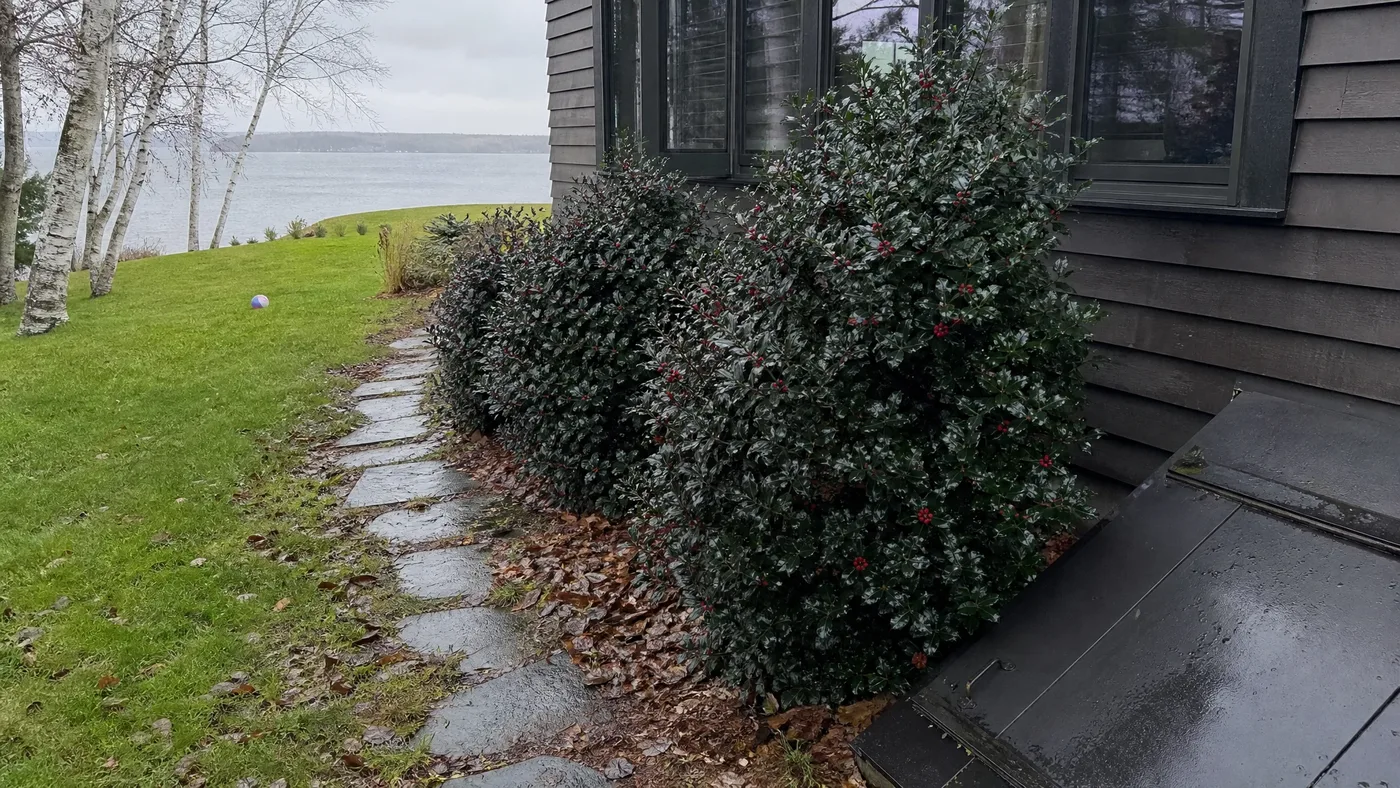
Blue Holly Varieties: Where China Girl Holly Fits In
One January morning years ago, a row of mixed blue hollies stood glossy under a coat of frost, and a visitor walking the path stopped and asked which one was which. We pointed, named and pointed again, and somewhere in the middle of it we realized that from a few steps back they all looked like the same dark, shining shrub.
They are not the same, and the differences decide whether a planting stays tidy, bears berries and comes through a hard winter. Below, you'll find out all about the Meserve hybrids and where China Girl sits among them, including size, hardiness, soil, upkeep, foliage, berries and pollination, and what we would recommend to each kind of buyer. A few of the siblings are males that will never carry a berry, and that one fact catches more people off guard than any other.
How Big the Blue Hollies Grow, China Girl Holly Included
Size sorts the family faster than any other trait, because the gap between the smallest and largest sibling is wide enough to change which yard each one suits. The table below uses the figures published by the extension and university sources we trust.
| Cultivar | Sex | Mature size | Habit |
|---|---|---|---|
| China Boy | Male | 3 to 5 feet tall and wide | The smallest of the group |
| Castle Spire | Female | 8 to 10 feet tall, 4 feet wide | Narrow and upright |
| Blue Princess | Female | 8 to 12 feet | Dense, heavy fruiter |
| Blue Prince | Male | 8 to 12 feet | Dense |
| China Girl | Female | 10 feet tall and wide | Compact, upright-rounded |
For comparison, the species typically grows 3 to 8 feet tall and 6 to 8 feet wide, so the named cultivars mostly run bigger than the textbook plant.
Verdict for Tight Spaces
If the space is narrow, the choice is easy and it is not China Girl.
Castle Spire holds its width to about 4 feet, which makes it the sibling for a side yard or a gap between windows, and China Boy suits a small foundation bed if you want a male without the bulk. China Girl is called compact, but Cornell puts it at 10 feet tall and wide, and it needs room to be rounded rather than squeezed.
Verdict for Big Screens
For a tall screen the contest is between China Girl and the two Blue siblings.
Blue Prince and Blue Princess can top it by a couple of feet, but they give that height back in cold tolerance, as the next section shows. China Girl grows slowly, so a 10-foot screen is a patient project, yet it is the one we would trust to arrive intact. Our China Girl and Blue Princess comparison goes deeper on that pairing.
Cold Hardiness Across the Meserve Family
These hybrids were bred to bring holly into places where the classic English kinds fail, but the siblings did not all inherit the same toughness. What follows ranks them as far as the sources allow, and where the sources are silent we say so.
The species as a whole has excellent winter hardiness to USDA Zone 5, and that is the baseline to keep in mind. Within the family, neither Blue Prince nor Blue Princess is reliably winter hardy. The practical order, then, puts China Boy ahead of the two Blues.
That last point matters for buyers at the other end of the map. China Girl is very heat-tolerant, a quality you do not expect from a holly bred for cold, and it widens the range where the plant stays happy.
Verdict for Cold-Zone Buyers
Our advice is plain: near the Zone 5 line, skip Blue Prince and Blue Princess and plant China Girl with China Boy.
We cannot give you a firm zone number for every sibling, because the sources do not publish one, so check the tag and your local extension service before you buy. Then read our guide to China Girl hardiness zones, which covers how exposure and wind change the picture within a zone.
Soil Tolerance and Where China Girl Holly Sulks
Every Meserve hybrid wants the same ground, and China Girl is neither more forgiving nor fussier than its siblings, so soil rarely decides between them. It does decide whether any of them thrive, and the two ways it goes wrong are worth knowing.
Meserve holly does best in average, slightly acidic, moist, well-drained soils, in full sun to part shade. Each of those words is doing work. Moist and well-drained pull in opposite directions, which is why the target is ground that holds steady moisture without ever standing in water.
Drainage Comes First
A holly in heavy clay that stays wet after rain will sulk long before a dry spell bothers it.
The roots of these shrubs are shallow and fibrous, and waterlogged soil starves them of air, so the leaves dull and the growth stalls. If your yard holds water, raise the planting bed rather than digging a deeper hole, because a deep hole in clay simply becomes a bucket.
Acidity and Yellow Leaves
We often see customers call about yellowing leaves on a plant that otherwise looks healthy, and the cause is usually soil that is not acidic enough rather than any disease.
Test before you plant and treat the result as a number to work with, not a verdict on the site. Our guide to the best soil for China Girl holly walks through amending.
Verdict: moderately picky, in line with the whole family. Good drainage and acid soil are non-negotiable, and nearly everything else is forgiving.
How Much Upkeep China Girl Holly Asks For
Upkeep is where the slow growth of this family pays off, since a shrub that adds little each year needs little correcting. The effort differs by cultivar mostly through how much size each one has to lose or hold.
Pruning Effort by Cultivar
The species grows slowly, with a habit from vase-shaped to rounded.
Castle Spire and China Boy need almost nothing beyond removing a stray branch, because their natural size already fits the spot they are sold for. Blue Prince and Blue Princess, at up to 12 feet, will eventually need height control if the space is limited. China Girl, rounded and dense, sits in the middle: a light shaping once a year keeps it neat, and our guide on pruning China Girl holly covers timing.
Feeding and Watering
Feeding is light for all of them, and a slow-growing shrub does not reward heavy doses.
Watering is the real demand. Because these hollies want consistent moisture, the first year or two after planting is when you must not let the root zone dry out, and a layer of mulch does much of that work for you. Once established, a deep soak in a dry spell is plenty.
Verdict: low upkeep for China Girl, and lowest of all for Castle Spire and China Boy. The Blue siblings are not hard work, just larger.
Leaf Color and Shine Among the Cousins
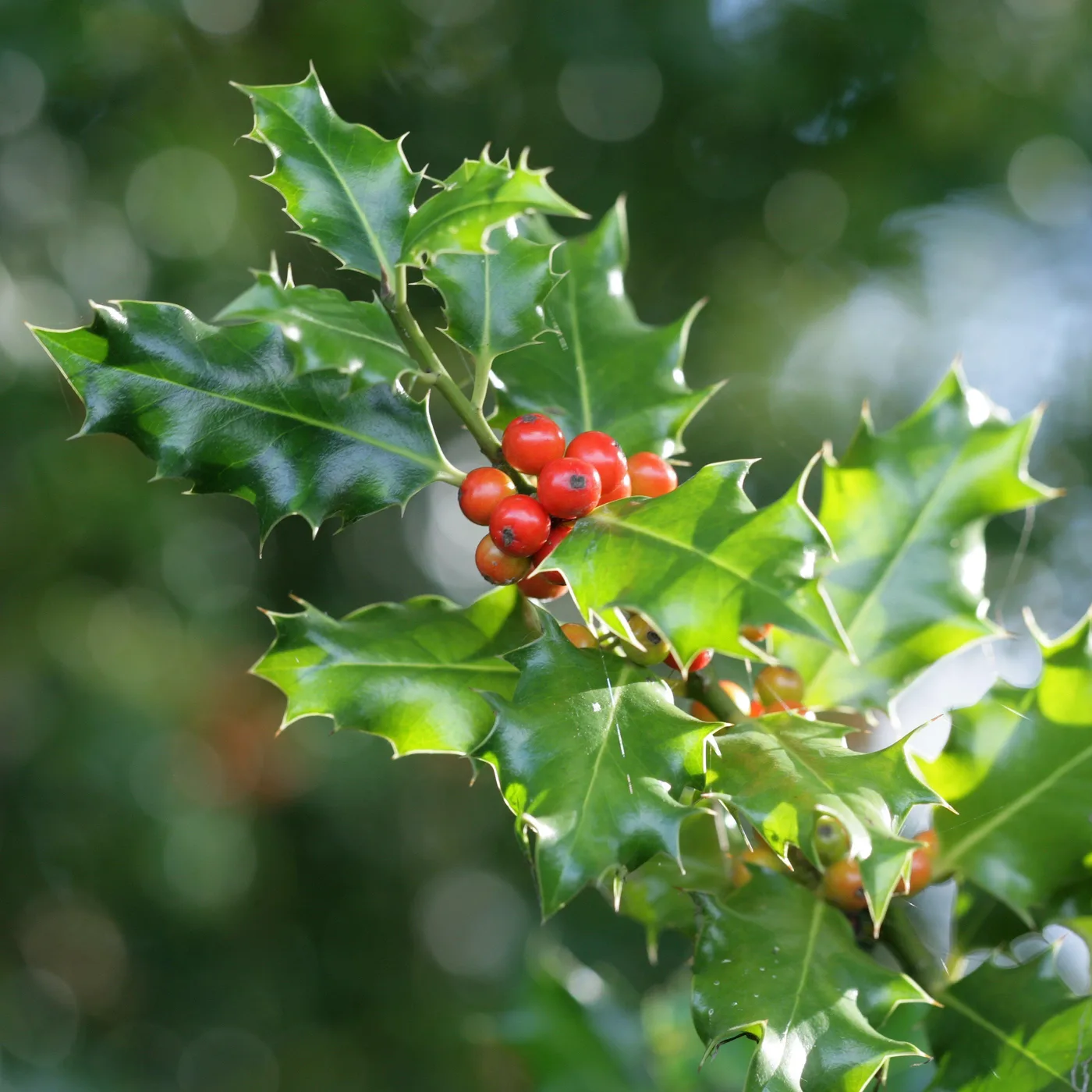
This is the trait that makes the whole family hard to tell apart in a row, so we will be honest about how little separates them. All of the Meserve hollies carry dark, glossy, blue-green evergreen leaves, and that is the reason the group is called blue holly at all.
The family has high-quality, dark, glossy, blue-green foliage with colorful fruit on the females, and China Girl's leaves are prominently spine tipped. Blue Princess is also listed with blue-green foliage. We cannot rank one sibling's gloss above another's, so we will not pretend to.
What Winter Does to the Look
Winter is when the family earns its place, since the leaves stay on and the sheen holds even under frost.
A frozen morning is the best test of a holly, because dull or browned foliage shows up at once against a healthy neighbor. Browning at the leaf tips after a cold, windy winter is the usual sign of stress, and it points back to hardiness and site rather than to the cultivar's color.
Verdict on the Best Looks
For pure appearance, our vote goes to China Girl.
The reason is the combination: a rounded, dense shape, dark leaves, and large red winter fruit on the female plants that show against the green. Castle Spire wins on line if you want an exclamation mark in the garden, and the males are handsome but have no fruit to add.
Berries and the Pollinator China Girl Holly Needs
Berries are the question we hear most, so it helps to sort the family into females and males before anything else. Only females fruit, and they only fruit when a male is close enough to pollinate them.
The rule is simple: female plants require a male plant in the vicinity, and a good ratio is one male for every 3 to 5 females. Customers usually ask us whether a neighbor's hollies can do the job, and the honest answer is that they can if they are close and flower at the same time, but a male of your own is safer.
Which Siblings Bear Fruit
The females in this lineup are China Girl, Blue Princess and Castle Spire.
Blue Princess is the heavy fruiter, since its fruit production is heavier than other cultivars. China Girl is known for large red winter fruit, and the flowers that lead to it bloom in spring, small and white to pinkish-white. The males are Blue Prince and China Boy, which produce no berries at all.
Choosing China Girl's Male
China Girl's natural partner is China Boy, its male pollinator.
China Boy is also the smaller and hardier of the two males, which makes it the better partner in cold zones. Our guide on whether China Girl holly needs a male pollinator covers placement in detail.
Choosing Your Blue Holly After Years of Watching Them
After enough winters spent walking the rows, the verdicts above settle into a few simple recommendations. They depend far more on your site and your zone than on any cultivar's reputation.
- If winters are cold, plant China Girl with China Boy and leave Blue Prince and Blue Princess to milder gardens.
- If you need a narrow screen or a slim accent, Castle Spire is the one, though you will need a male nearby for fruit.
- If you want the heaviest berry display and your climate is gentle, Blue Princess is worth the extra height.
- If the bed is small, China Boy gives you a compact, hardy male, and it can pollinate a female planted elsewhere on the property.
- If you want one balanced, glossy shrub with big red fruit and low upkeep, China Girl is the answer for most yards.
China Girl is the cultivar we grow and sell, so we are not neutral, but the reasoning above holds whichever one you choose.
The China Girl Holly We Would Plant Today
If we were planting a new bed this season, we would put in one China Girl with a China Boy beside it, give it 10 feet of room, and set it in moist, acidic, well-drained ground. Then we would leave it alone for a few years and let the slow growth do its work. Before you decide, though, walk a nursery row in winter, when the leaves are glossy under frost and the real differences in shape and color show.
China Girl Holly
Nursery-grown China Girl Holly in sizes from 2 GALLON, shipped to your door.
From $87.99
Shop Now →Our growers watch this plant all year, from the pale spring flowers through summer moisture to fruit set in fall and leaf color after the first hard freeze, because each season tells us something about how a particular planting is doing.