What Is Blue Holly? The Story Behind China Girl Holly
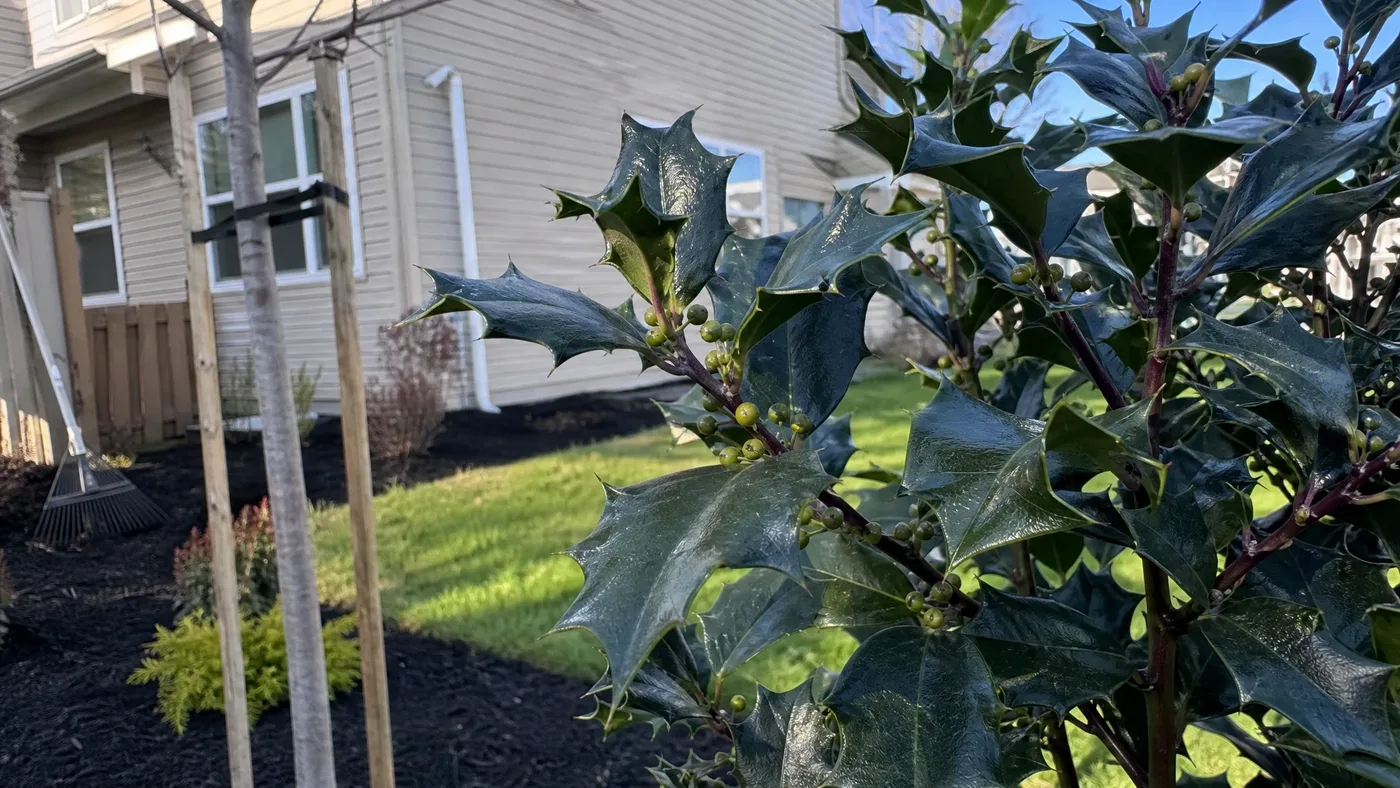
Why would a holly be called "blue" when no leaf on it is actually blue? Customers ask us this often, and the answer mixes leaf color, plant breeding and a few naming habits that grew up around one breeder's work. The leaves are dark green with a cool, bluish cast, and that cast gave the whole group its nickname.
The names matter more than they seem. Search for "blue holly" and you may land on a different plant than the one you meant, and search for "Chinese holly" and you reach a species that North Carolina lists as invasive. Sorting out the names keeps you from buying the wrong shrub or worrying about the wrong one.
In this article, we'll go through where the hybrid came from, how its botanical name breaks down, and what its evergreen habit and invasiveness record mean for your yard.
A Hybrid Born in St. James, New York
This plant begins with one person's breeding work, so we begin there. Knowing who made it, and from what, explains most of the names you will meet later.
According to the UConn plant database, Mrs. F. Leighton Meserve of St. James, New York, produced the initial hybrids, and Conard-Pyle Nurseries introduced them. Most references give her first name as Kathleen. A hybrid is the offspring of two different species. A breeder crosses the parents, grows out the seedlings and keeps the ones that carry the best traits of each side.
What came out of that work was a group of cold-hardy shrubs with dark, glossy, blue-green evergreen foliage and colorful fruit on the female plants, as the Bailey Arboretum describes them. The group is named for her, and every plant in it is a Meserve hybrid.
Where the Parentage Sources Disagree
Ask which two species were crossed and you will get two answers, and we think you should know about both.
The Meserve hybrids are a cross of English holly (Ilex aquifolium) and Ilex rugosa. Another version of the parentage of this plant is Ilex cornuta x Ilex rugosa, which puts Chinese holly on one side. We have not found a source that settles it. Either way, China Girl is a hybrid with its own identity, not a Chinese holly.
From Meserve Hybrids to 'Mesog'
Inside the Meserve group, individual plants are named as cultivars, and that is where China Girl fits.
'Mesog' is the cultivar name, and China Girl® is the trademarked trade name it is sold under. The two refer to the same plant. When a tag says either one, you are looking at a single selection from the Meserve hybrids, not the whole group.
Reading the Name Ilex x meserveae Piece by Piece
A botanical name works like a mailing address. The genus is the town, the species is the street, and the cultivar is the house. Each piece narrows the search until only one plant is left.
The table below takes the full name apart, one piece at a time.
| Piece | What it tells you |
|---|---|
| Ilex | The genus, which is the holly family of plants. Anything starting with Ilex is a holly. |
| x | The hybrid sign. Read it aloud as "hybrid" or "cross," not as the letter. |
| meserveae | The species name, honoring Mrs. Meserve. The ending is Latin for "of Meserve." |
| 'Mesog' | The cultivar name, written in single quotes, naming this one selection. |
| China Girl® | The trademarked trade name. It is not part of the botanical name. |
What the x Is Doing
The small x causes more confusion than any other part of the name, so it deserves its own explanation.
It tells you the species itself came from a cross. Ilex meserveae is not a wild species that someone found. It exists because people put two parents together. The x is not a mistake and not a variable, and you can leave it out when you speak.
Searching by Name
Because the plant has so many labels, searches wander. Here is how to land on the right one.
"Blue holly botanical name" and "Ilex meserveae common name" both lead to Ilex x meserveae. "China Girl holly scientific name" leads to Ilex x meserveae 'Mesog'. If a result shows Ilex cornuta instead, you have found Chinese holly, a different plant.
Why China Girl Holly Carries so Many Nicknames
Most of the names you see in catalogs came from one of three places: the breeder, the leaf color or the trade. Here is where each one comes from.
| Name | Where it comes from |
|---|---|
| Meserve holly, Meserve hybrid holly | The breeder, Mrs. Meserve, who made the first hybrids. |
| Blue holly | The dark, glossy, blue-green leaves of the group. |
| 'Mesog' | The cultivar name for this selection. |
| China Girl | The trade name for 'Mesog'. The sources we use do not explain why it was chosen. |
"Blue" is the one that trips people up. It describes a cast of color in the leaf, the same way "blue spruce" describes needles you would still call green in a paint store. No holly leaf is blue, but the Meserve group looks cooler and darker than most hollies, and the name stuck.
China Girl and the Blue Hybrids
Some Meserve hybrids carry "Blue" in their cultivar names, and shoppers often assume they are all the same plant.
They are not. The UConn database notes that China Girl shows better heat tolerance than the Blue hybrids. Our comparison with Blue Princess covers the practical differences. What we tell customers is to buy by cultivar name, not by "blue holly," because the group name tells you very little about how a plant will behave.
Is the China in China Girl a Clue?
One of the most common questions we get is whether China Girl is a Chinese holly. It is a fair guess from the name, since Ilex cornuta is called Chinese holly.
The trade name does not make it that species. China Girl is sold as a Meserve hybrid, Ilex x meserveae 'Mesog'. The invasiveness section below returns to Chinese holly, because the mix-up has consequences.
What Evergreen Means for China Girl Holly in Winter
Evergreen means the plant keeps living leaves through the cold months instead of dropping them all in fall. It does not mean the leaves never fall. Old leaves are shed a few at a time while new growth replaces them.
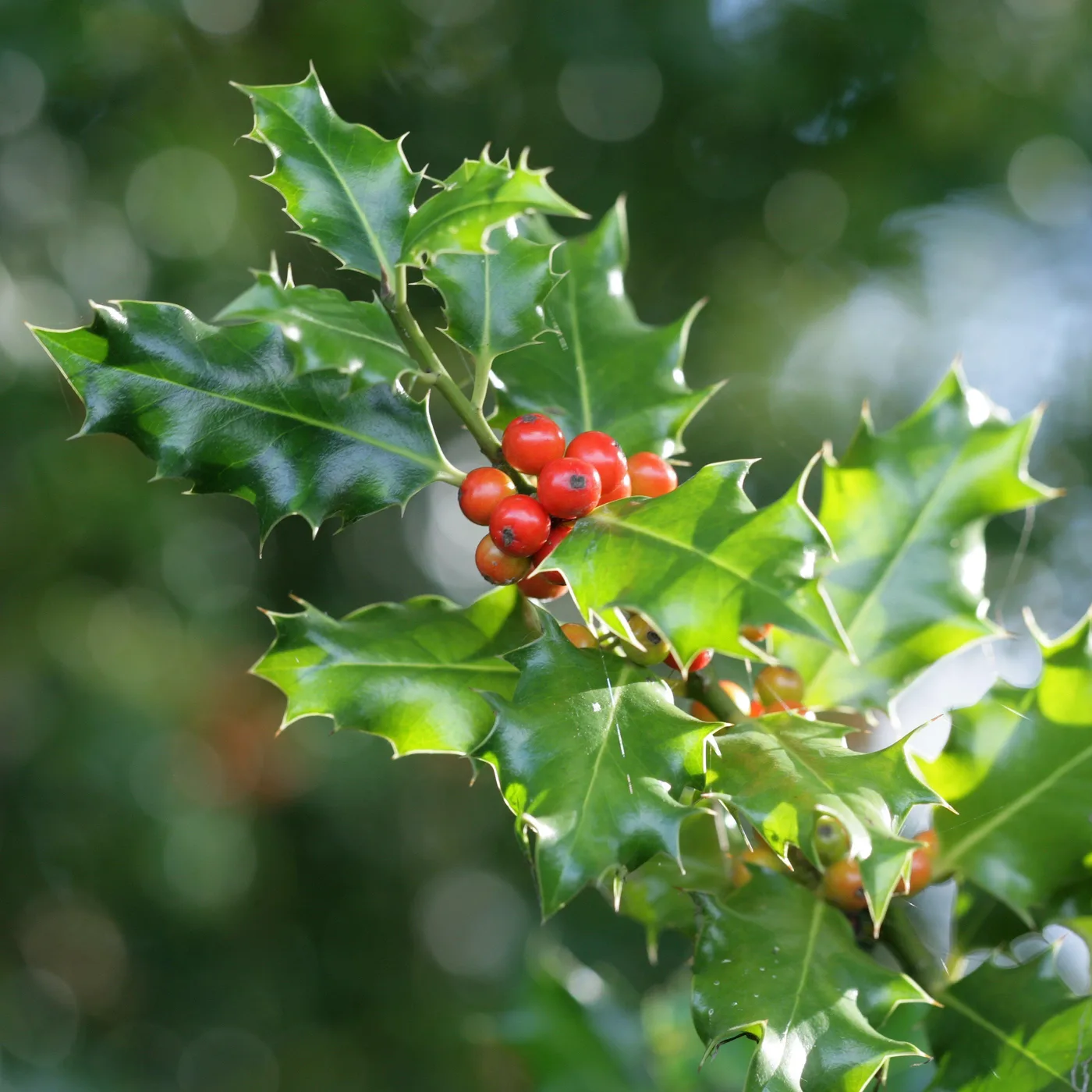
For China Girl, that gives you dark, glossy, spine-tipped leaves all winter. Small white to pinkish-white flowers open in spring, and the red fruit on female plants persists into spring. That makes it one of the few shrubs that looks planned in January.
Cold Hardiness and What Winter Costs the Leaves
Keeping leaves through winter has a price, and the price is paid in water and wind exposure.
Meserve holly has excellent winter hardiness to USDA Zone 5. Hardiness protects the plant. It does not protect every leaf. Because the foliage stays on, brown or bleached leaves in late winter are the first sign of a dry or exposed spot. Our winter care guide covers how to prevent that.
Reading Winter Leaves Correctly
Not every change in winter foliage is a problem, and learning to tell the difference saves needless worry.
A few older leaves turning yellow and dropping is normal evergreen turnover. Browning along one exposed side of the shrub points to wind and dry soil. Yellowing across many leaves, especially on new growth, is a soil question first. Check drainage and acidity before you reach for fertilizer.
Where China Girl Holly Stands on Invasiveness
Invasive means a plant escapes planting and spreads into wild areas, crowding out other plants. A plant can be a fine garden shrub and still be invasive somewhere. So the question is not abstract, and the answer depends on which holly you mean.
Why Chinese Holly Gets the Warning
The invasive plant here is Ilex cornuta, and its record is clear in the sources we use.
Chinese holly is from China and Korea, where it grows in ravines, on hills and alongside mountain paths. It has been known to escape cultivation and naturalize in some states, including North Carolina and Alabama, and the NC Invasive Plant Council lists the species as invasive.
What We Can Say About the Hybrid
China Girl has no native range, because it is a made plant, a hybrid that began in a New York breeder's garden.
None of the sources we rely on list Ilex x meserveae as invasive. We treat it as a well-behaved garden shrub. Still, Chinese holly may be in its parentage, and a parent's record does not automatically pass to its offspring in either direction. So check your state's invasive plant list or your local extension service before planting.
Putting China Girl Holly's History to Work in Your Yard
The background gives you practical expectations, and a few of them differ from what you may read about hollies in general.
Plan for the Cultivar's Size
The species and the cultivar do not grow to the same size, and the difference affects where you plant.
Meserve hollies typically reach 3 to 8 feet tall and 6 to 8 feet wide. For China Girl itself, Cornell lists a shrub that grows to 10 feet tall and wide. Growth is slow, so it takes time to get there. What we tell customers is to measure for the full 10 feet, not the size at planting. Our size guide has the detail.
Match the Site to the Hybrid
The soil and light preferences come straight from the species, and a poor match shows up in the leaves.
Meserve holly does best in average, slightly acidic, moist, well-drained soil in full sun to part shade. Our soil guide walks through pH and drainage.
Heat, Sun and Shade
Here the cultivar parts ways with the group, and it changes how you read advice written for other Meserve hybrids.
Nebraska Extension, writing about Meserve hybrids in general, recommends at least partial shade in summer for cooler sites. China Girl tolerates heat very well, better than the Blue hybrids do. That does not make shade a mistake. It means this cultivar gives you more freedom in a hot, bright spot.
Reading Yellow Leaves Back to the Soil
When a customer calls about yellowing, we work through the same short list, in order, because the hybrid's needs point to the likely cause.
First, ask whether water drains away or sits. Second, ask whether the soil stays evenly moist, since Nebraska Extension calls for well-drained soil with consistent moisture. Third, ask whether the soil is acidic enough, because this holly wants slightly acidic ground. Test before you amend, and change only what the test points to.
Berries Need Two Plants
Fruit is part of what people expect from a holly, so it belongs in any honest picture of the plant.
The UConn database describes Meserve hollies as dioecious, with separate male and female plants. Only a female carries the red fruit, and she needs a male nearby to set it. Our pollinator guide explains how to plan for that.
What China Girl Holly Teaches About Hybrids
China Girl is a good example of why breeders cross species at all. Hybrid vigor is the idea that a cross can produce offspring that outperform either parent, or at least combine their strengths.
The Meserve hybrids show this in a simple way. They pair cold hardiness with glossy, dark evergreen foliage, a combination that is hard to find in a single species. Then, within the group, selection does more work. 'Mesog' is described as a very heat-tolerant, evergreen shrub holly with large red winter fruits and a compact, upright-rounded habit.
That is the larger lesson. A hybrid is a starting point, and the cultivar is where the useful traits get fixed. It is also why we ask you to look past "blue holly" and use the full name.
Terms to Keep, From Blue Holly to 'Mesog'
A hybrid is a plant bred from two different species. Evergreen means it holds living leaves through winter and sheds old ones a few at a time. Blue holly is the nickname for the cool, dark leaves of the Meserve group, which carries its breeder's name. Ilex x meserveae is the botanical name of that group, and Ilex x meserveae 'Mesog' is the one cultivar sold as China Girl®.
China Girl Holly
Nursery-grown China Girl Holly in sizes from 2 GALLON, shipped to your door.
From $87.99
Shop Now →Hold on to that last name and the rest sorts itself out, from search results to plant tags to invasive plant lists. Every China Girl we ship is container-grown on our own farms, bound and boxed by our crew for the trip, and ready for the planting hole the day it reaches your door.