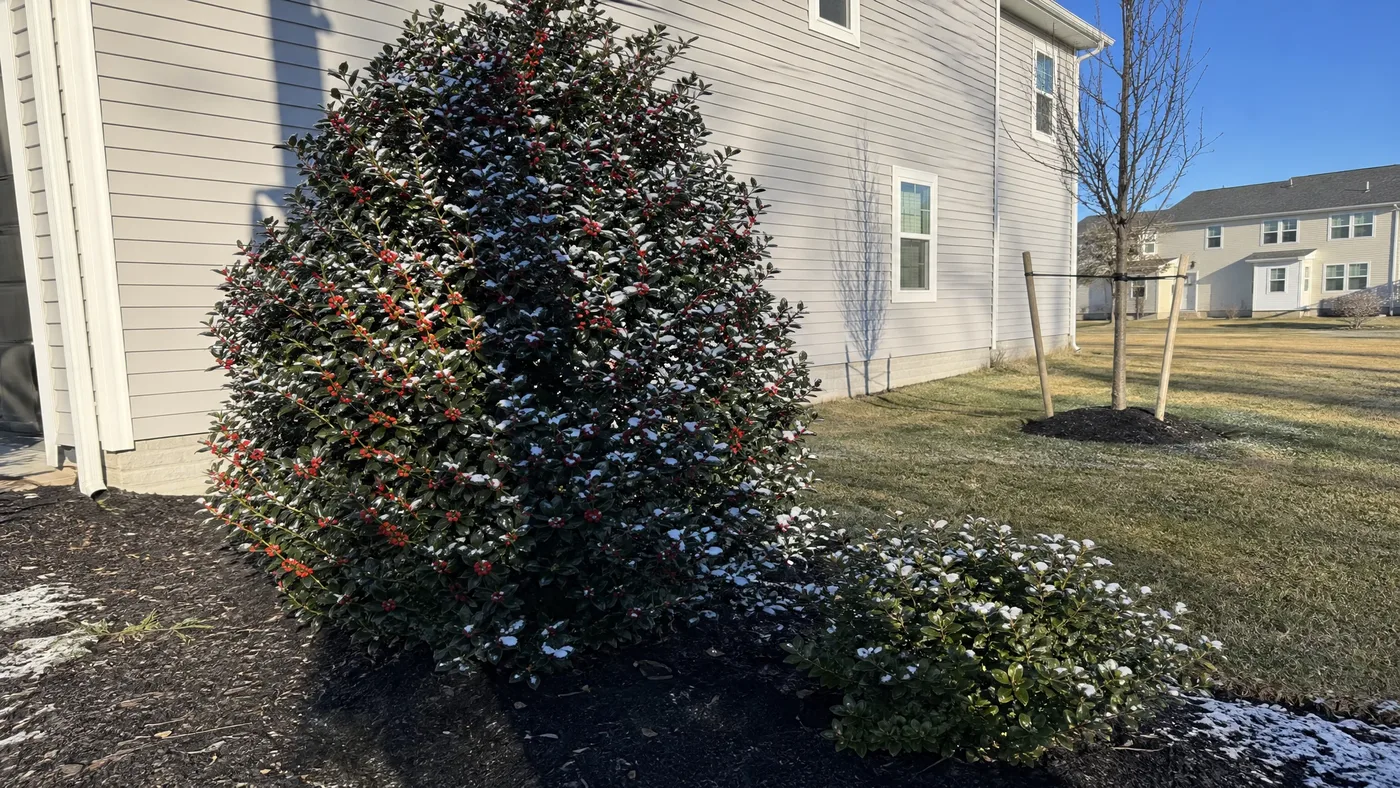
China Girl Holly vs Dwarf Chinese Holly: Size, Species and Care
Type "dwarf China Girl holly" into a nursery search box and you get a page of mismatched plants. Some are glossy mounding shrubs, some carry small rectangular leaves, and few of the listings agree on what they are selling. The common belief is that a small version of China Girl must exist, and that one of those results is the real one.
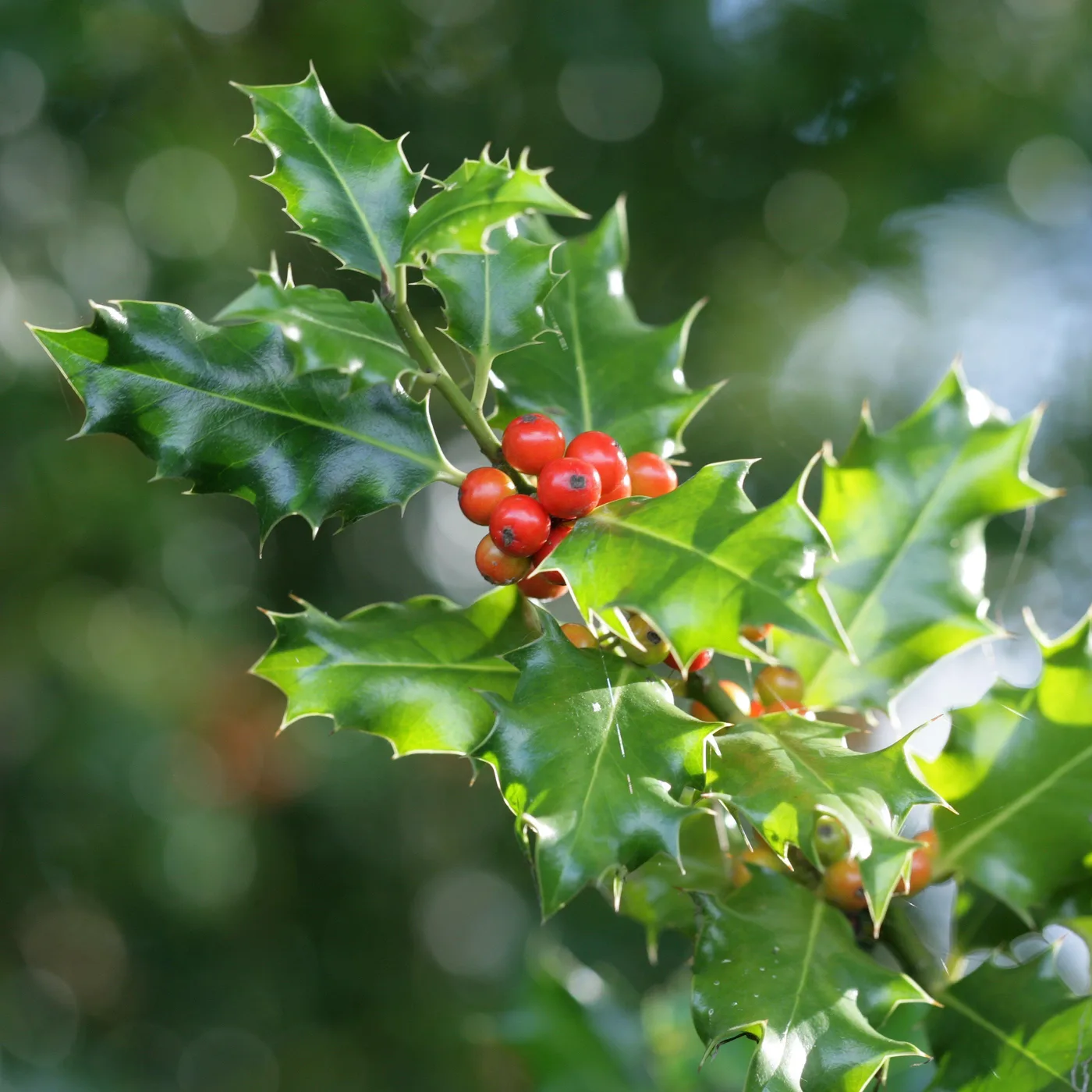
What we see instead is two different hollies sharing one search. China Girl Holly is Ilex x meserveae 'China Girl'. Dwarf Chinese holly is a separate plant, usually sold as Ilex cornuta 'Rotunda'. They differ in species, size, hardiness and the way they set berries.
This guide covers everything you need to know about telling these two hollies apart, from species and naming to mature size, care and pollination, and it ends with how to read a label before you pay.
Is There a Dwarf China Girl Holly?
We know of no dwarf form of China Girl. Here is what the records show and what a "dwarf" listing usually turns out to be.
What the Records Show
The botanical sources we rely on describe one China Girl. Cornell's cultivar page describes a single shrub that grows to 10 feet tall and wide. Nebraska Extension notes that 'China Boy' and 'China Girl' were introduced together in 1979, as a pair.
None of those entries mention a compact or dwarf selection. A dwarf cultivar would carry its own cultivar name in quotes, and none appears in the records we checked.
What a Dwarf Listing Usually Is
When a seller writes "dwarf China Girl," one of three things is going on. If the photo shows small rectangular leaves with several sharp spines, it is a different holly, most often Rotunda. If the tag says only "China Girl holly" with a small pot size, you are looking at a young plant, not a dwarf. If the listing gives no botanical name at all, treat it as unverified.
One of the most common questions we get is whether a smaller China Girl exists. Your best move is to ask for the botanical name in writing and compare it to the one above.
If You Already Own One
Say you bought a plant sold as a dwarf China Girl and want to know what you have. Start with the tag, then the leaf. A rectangular leaf with five to seven sharp spines is Rotunda. A dark, glossy leaf that is spine tipped but not boxy points to China Girl. If the leaf and tag disagree, trust the leaf and ask the seller for the botanical name.
China Girl Holly and Chinese Holly Are Not One Species
The Latin names settle this faster than the common names, so start there.
China Girl is Ilex x meserveae. The "x" marks a hybrid. Dwarf Chinese holly, Ilex cornuta 'Rotunda', is a cultivar of a true species. China Girl is a selection of Ilex cornuta x I. rugosa, so Chinese holly is one parent, not the whole plant.
Our sources disagree on the other parent. NC State gives English holly (Ilex aquifolium) x I. rugosa for the Meserve hybrids in general. We would not stake a claim on either, and you do not need to. What matters is that China Girl is a hybrid and Rotunda is not.
Why the Leaves Still Look Related
The Chinese holly parent is the reason China Girl's leaves are dark, glossy and prominently spine tipped. That inheritance explains why buyers confuse the two. The difference shows in the leaf shape. Rotunda leaves are rectangular, with five to seven sharp spines each. China Girl's leaves are spine tipped but not described that way.
If you want the full story of how the Meserve hybrids came about, our guide on the story behind China Girl Holly covers it.
Both Are Chinese Hollies by Name Only
Many buyers assume that two plants with "China" or "Chinese" in the name must be close relatives. The names do not work that way.
"Chinese holly" is the common name for the species Ilex cornuta. "China Girl" is a selection name, and it travels with its male partner, China Boy. One name points to a species, the other to a pair of named hybrid plants. The sources we use do not explain why the name was chosen, so we will not guess at it.
The one real link is the parentage above. China holly is one parent of China Girl. That is a thin bloodline connection, closer to a distant cousin than a sibling, and it tells you nothing about size, hardiness or fruit.
How to Read the Names
Use this order of reasoning when a listing is unclear:
- If the name includes a quoted cultivar such as 'China Girl' or 'Rotunda', that cultivar is the plant, whatever the common name says.
- If the listing says "Chinese holly" or "dwarf Chinese holly" with no cultivar, expect Ilex cornuta and ask which cultivar it is.
- If it says "blue holly" or "Meserve holly," expect a hybrid, which could be China Girl or another selection.
Why Dwarf Chinese Holly Stays so Small
People reason that a small holly with a similar name must be a smaller China Girl. The size belongs to Rotunda's own habit.
Rotunda is a dwarf, rounded, mounding evergreen 3 to 6 feet tall and 6 to 8 feet wide. It grows as a low mound that is wider than it is tall. That shape is built in, which is why it does not climb upward the way many hollies do.
You may see Rotunda listed under Burford dwarf names. We would treat that as seller shorthand and go by the cultivar name Rotunda, since that is what the extension records use.
Other Differences You Will Notice
Rotunda is a female clone. It was first reported as sterile, but plants 25 years old or older do produce fruit, often hidden by the dense, spiny leaves. So you buy it for the mound and the foliage, not for berries.
Hardiness is the other big gap. Oregon State lists Rotunda as hardy to USDA Zone (6)7. If you garden in zone 5 or most of zone 6, the dwarf Chinese holly is a gamble, and China Girl is not. A small plant is not a smaller China Girl. It is a different plant with different limits.
Expect China Girl Holly to Mature Taller Than the Dwarf
The opposite mistake is assuming China Girl stays small because it grows slowly. Slow is not the same as short.
Cornell says China Girl grows to 10 feet tall and wide, and NC State gives 3 to 8 feet tall and 6 to 8 feet wide for Meserve hollies as a group. Plan for the top of that range, because the sources differ and you will not know where your plant lands until it is mature.
Meserve hollies are slow growing, so reaching those sizes takes years. We often see customers surprised by a shrub that has quietly passed the shape they planted. Our guide to China Girl Holly size and growth rate has the year-by-year picture.
China Girl and Rotunda Compared
This table sets the two plants next to each other using the sources above.
| Trait | China Girl Holly | Dwarf Chinese Holly |
|---|---|---|
| Botanical name | Ilex x meserveae 'China Girl' | Ilex cornuta 'Rotunda' |
| Mature size | About 6 to 10 feet tall and wide | 3 to 6 feet tall, 6 to 8 feet wide |
| Habit | Compact, upright-rounded | Dwarf, rounded, mounding |
| Leaf | Dark, glossy, prominently spine tipped | Rectangular, five to seven sharp spines |
| Hardiness | Zone 5 | Zone (6)7 |
| Berries | Female, needs a male nearby | Female clone, rarely fruits |
Do They Need the Same Care and Mates?
Care overlaps in places and splits in others, so check each point against the plant you are actually buying.
Hardiness and Heat
Meserve holly has excellent winter hardiness to USDA Zone 5. Rotunda sits a zone or two warmer. The Bartlett Arboretum describes China Girl as very heat-tolerant, so it is not limited to cold regions. Our China Girl Holly hardiness zones guide maps this out.
Sun and Soil
Meserve hollies do best in average, slightly acidic, moist, well-drained soil in full sun to part shade. If a China Girl yellows, test the soil pH and check drainage before blaming the plant. Soggy ground and soil that is not acidic enough are the first two causes we look at.
For Rotunda, our sources do not give soil figures, so ask your local extension service.
Berries and Pollination
This is where the two plants split most sharply. Nebraska Extension says female plants will not produce berries without males, although one male can pollinate several females. China Girl is a female, so you need a male such as China Boy within range.
Rotunda is also a female clone, but a male will not change the picture much, since it rarely fruits anyway. Our guide on whether China Girl needs a male pollinator covers the details.
What the Labels Mean for Your China Girl Holly Order
Before you order China Girl Holly, you want to match the listing to the plant. A few checks do it.
Order Checklist
Run through these points before you pay:
- The botanical name reads Ilex x meserveae 'China Girl'. Some sources write it as Ilex 'Mesog' China Girl, which is the same plant. Ilex cornuta anywhere in the name means Chinese holly.
- The photo shows dark, glossy leaves with prominent spine tips. Small rectangular leaves with five to seven sharp spines point to Rotunda.
- The listed hardiness is Zone 5. If it says Zone 7, you are not looking at China Girl.
- The listing mentions a male such as China Boy if you want berries. If it does not, ask.
- The mature size matches what you have room for, up to about 10 feet tall and wide.
Container size matters too, since it tells you how mature the plant is. Our container size buying guide explains what to expect at each size.
If a seller cannot or will not give you the botanical name, that is your answer. A real China Girl listing names itself.
Check the Botanical Name Before You Pay
Use this rule. If the listing says Ilex cornuta 'Rotunda' or dwarf Chinese holly, you are buying a 3 to 6 foot mound that spreads 6 to 8 feet, suits zone 7 winters, and seldom fruits. If it says Ilex x meserveae 'China Girl', you are buying a hardy zone 5 hybrid that can reach about 10 feet and needs a male nearby for berries. If it says neither, do not pay until the seller confirms the botanical name.
China Girl Holly
Nursery-grown China Girl Holly in sizes from 2 GALLON, shipped to your door.
From $87.99
Shop Now →We are a small business, and we grow China Girl Holly ourselves. On our farms we give it the conditions the extension sources describe: slightly acidic, moist, well-drained soil and full sun to part shade.