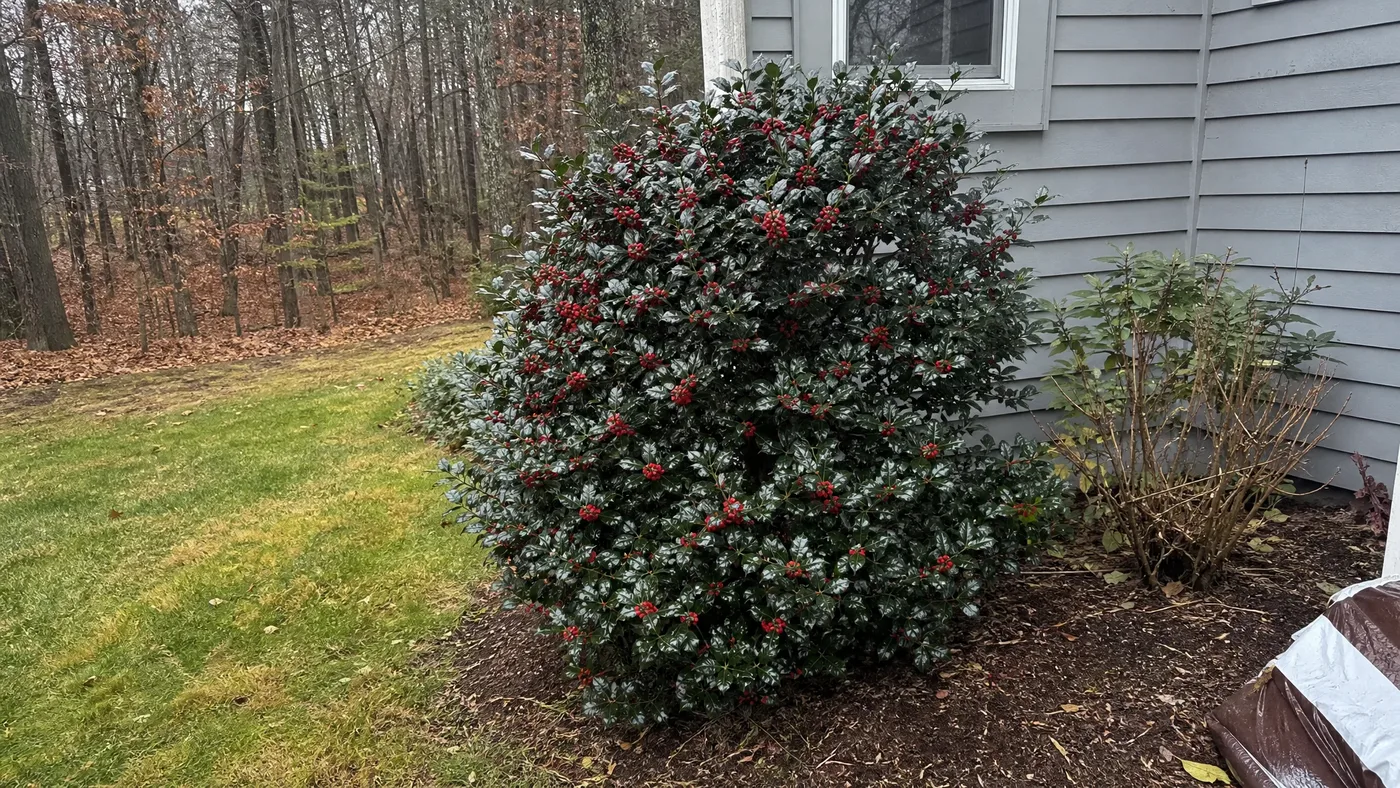
China Girl Holly vs American and English Holly: Which Wins
Before any shrub is loaded, we ask three things. Where is it going, what will it meet when it gets there, and who will unload it and put it in the ground? That packing-list habit settles most holly arguments before they start.
This guide covers everything you need to know about matching a holly to its yard, from a narrow side bed and a windy corner lot to a hot deck pot and a roomy country yard. China Girl is the blue holly we measure the others against.
Get the match wrong and you end up with a shrub that outgrows its bed, browns in January wind or never sets a berry. Get it right and you have dark evergreen leaves and red fruit for years.
A Narrow Side Bed Where China Girl Holly Fits
Case one is the yard we hear about most: a strip between the house and a fence with very little width to spare. Here is how each holly handles it.
American holly is the quick no. It grows as a tree 40 to 60 feet tall and 10 to 20 feet wide. A side bed is a corridor, and that tree will block it. English holly is no smaller, as we cover below.
China Girl is the one that fits, but you need honest numbers. Cornell lists this cultivar as a shrub that grows to 10 feet tall and wide. NC State gives the Meserve hybrids as a group 3 to 8 feet tall and 6 to 8 feet wide. Plan your bed around the group figure and you will be short by a couple of feet.
Do the Subtraction First
Before you buy anything, run this small calculation on the bed. It takes a tape measure and one minute.
Measure the bed's width. Subtract the plant's mature width. Say the bed is 4 feet wide: against Cornell's 10 feet, you are 6 feet short, and every inch of that shortfall becomes trimming or a plant leaning over the path.
Growth is slow, so you will not hit the problem in year one. That is the trap. The plant looks perfect at planting and crowds the fence years later. Our China Girl Holly size guide walks through the timing.
Spines Beside a Walkway
Narrow beds usually run beside a path, so leaf texture matters here.
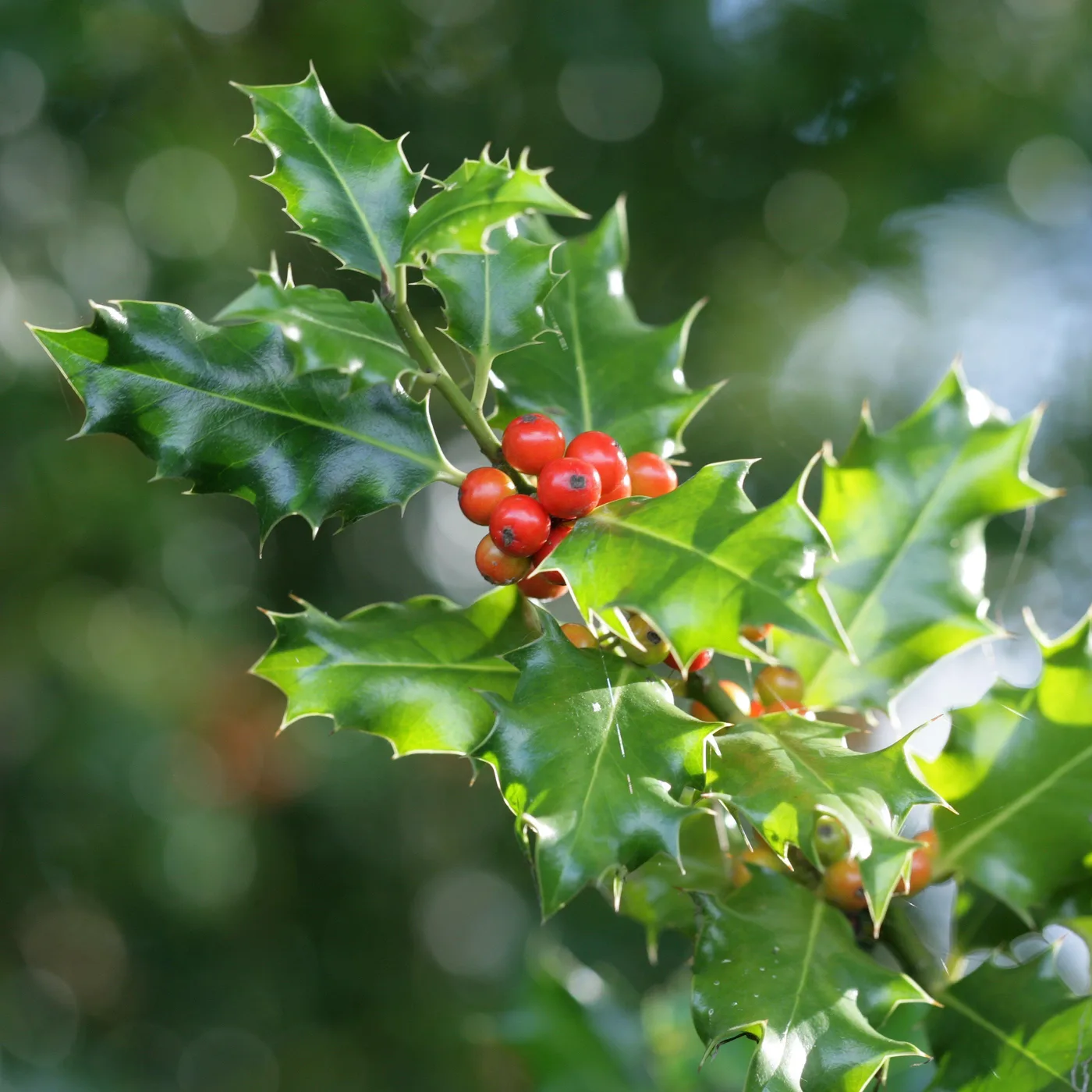
American holly leaves are thick and leathery, 2 to 4 inches long, with spiny teeth along the margins. China Girl's leaves are dark and glossy and prominently spine tipped. Neither is a leaf you want brushing bare arms.
One of the most common questions we get is whether a holly can sit beside a walkway. Yes, if you set it back from the edge and keep the path side trimmed. Plant it toward the fence side of the bed, not the middle.
The Windy Corner Lot and Its Exposure Problem
Case two is a corner lot with nothing to slow the wind. Cold hardiness and winter leaf scorch are two separate problems here, and the three hollies handle them differently.
Blue Holly and American Holly in Open Wind
Start with the cold itself, because the sources agree both of these hollies reach a long way north.
Meserve holly has excellent winter hardiness to USDA Zone 5. American holly grows in zones 5a through 9b. On paper, neither one is the weak link on a cold corner. Wind is the real test.
Scorch happens because evergreen leaves keep losing water in winter wind while frozen soil cannot resupply the roots. A plant can be perfectly hardy and still look rough in March.
Reading the Damage in March
When a customer calls about a browned holly, we work through the same short list before anyone reaches for pruners.
- Look at which side is damaged. Browning only on the windward face points to wind and not to disease or soil.
- Check the leaf edges and tips first. Tan, dry margins on otherwise green leaves are the classic scorch pattern.
- Scratch a small twig with a thumbnail. Green underneath means the wood is alive and the plant will push new growth.
- Wait until spring growth starts before cutting anything. Dead-looking leaves often hide living buds.
The prevention is a windbreak on the windward side, deep watering before the ground freezes and a layer of mulch. Our winter care guide for China Girl covers the sequence.
English Holly's Narrower Margin
English holly needs a harder look on an exposed site.
English holly is hardy in all of the UK and northern Europe, at minus 20 to minus 15 °C. That is about minus 4 to 5 °F. Compare your recorded winter low to that range, not just your zone number.
Add wind on top of a marginal low and you have the conditions where scorch turns into dieback. For the windy corner we would plant China Girl, set where a fence or house takes the worst of the wind.
A Hot Deck Pot Holding China Girl Holly
Case three is a large pot on a sunny deck, with heat bouncing off boards and siding. This is where blue holly's reputation for cold hardiness can mislead you.
Heat, Roots and the Pot Itself
Heat on the leaves is not the main danger. A pot's roots are.
The Bernheim Arboretum calls China Girl very heat-tolerant, with a compact, upright-rounded habit. That suits a deck. But a pot dries far faster than a bed, and these hollies want well-drained soil with consistent moisture, as Nebraska Extension puts it. Check the pot by hand every few days in summer and water when the top inch or so is dry.
It grows in full sun to part shade. On a hot deck we tell customers to favor the part-shade end, with relief in the late afternoon.
Yellow Leaves in a Pot
A potted holly that turns pale usually has a soil problem before it has a plant problem.
These hollies prefer slightly acidic soil, and potting mix can drift out of that range over a few seasons of watering and feeding. Yellowing leaves with green veins are the sign. Send a sample to your local extension service for a pH reading and ask what they recommend. Soggy mix and a clogged drainage hole cause similar yellowing, so check the hole first.
Our container growing guide covers pot size and repotting. An American holly in a pot is a short-term arrangement at best, since it is built to be a 40 to 60 foot tree.
Leaves and Berries Up Close
A deck puts the plant at arm's length, so texture and fruit matter more than they would across a lawn.
The leaves are dark, glossy and blue-green, with spine tips you will notice when you reach in to water. Small white to pinkish-white flowers open in spring.
The large red fruit comes only on a female plant, and China Girl is female. It needs a male Meserve hybrid nearby, which on a deck may mean a second pot. The fruit then lasts into spring.
Where American Holly Earns the Long Haul
Case four is the opposite yard: acres of room, no foundation to crowd and no hurry. Here American holly stops being the wrong answer and becomes a very good one.
It is a big, durable tree with deep green leaves that are thick and leathery, with spiny teeth along the margins. Its listed zones run 5a through 9b, a wide spread. If you want a landmark specimen or a tall evergreen screen and can wait for it, a blue holly will not give you that height.
You will hear that you should plant the native and be done. Native is a fine reason only when the tree has the room. We would not tell a small-yard buyer to plant one for the label.
What to Plan Around the Tree
A tree this size changes the yard around it, so the site questions are different from a shrub's.
Think about where its 10 to 20 feet of width will fall in ten or twenty years, and keep it clear of the house, utility lines and driveways. Leave room to walk around it. Low branches with spiny leaves are pleasant on a lawn edge and unpleasant on a mowing route.
The Berry Habit and the Male
Berries are where most American holly plans quietly fail, so settle this before you plant.
Male and female flowers grow on separate trees. The bright red or orange fruit appears only on female plants after proper pollination. If you want berries you need both sexes within pollinating distance, and with a tree this size you cannot easily swap one later.
The same logic applies to China Girl, which our male pollinator guide explains in full. Buy the pair together, tagged by sex.
When English Holly Is the Wrong Cargo
English holly looks like the classic Christmas holly, and that is exactly why people order it for yards it was never rated for. Two kinds of yard are the usual trouble.
English holly has dark, glossy green leaves that are usually strongly spiny. It also reaches a height of more than 12 meters, about 40 feet, and a spread of 4 to 8 meters, about 13 to 26 feet. That is a tall, wide plant with a prickly leaf, so it fails the side bed and the deck pot before the weather even comes up.
The cold yard. Its hardiness, roughly minus 4 to 5 °F, suits the UK and northern Europe. If your winter lows or wind chill push past that range, you are asking it to survive outside what it tolerates. The Meserve hybrids, listed to Zone 5, are the safer choice there.
The humid, hot yard. The sources we use say nothing about English holly in hot, humid summers, and we would not assume it carries over from a mild maritime climate. Ask your local extension service what grows well in your area. China Girl at least has a documented heat tolerance.
Reading Three Yards Before You Order China Girl Holly
The yards above boil down to a handful of questions. Ask them about your own site, in this order, and each answer points back to a holly.
- How wide is the spot, and how wide will the plant be? China Girl needs room for 10 feet of width, so a narrow bed means trimming.
- What is your recorded winter low, and how much wind reaches the plant? The Meserve hybrids are listed to Zone 5, but a windbreak matters more than the zone on an exposed corner.
- Will the roots dry out or bake? In a pot or hot bed, China Girl copes with heat, but you must keep the soil evenly moist.
- Do you want berries? Only females fruit, so confirm a male is nearby for any holly you choose.
- Do deer visit? Protection is strongly recommended, so read our deer and rabbit guide first.
Order China Girl Holly in This Sequence
American holly wins the roomy rural yard, English holly is a hard sell in most yards we hear about, and China Girl wins the narrow bed, the windy corner and the hot pot. Each answer comes from the site, not the plant's reputation.
China Girl Holly
Nursery-grown China Girl Holly in sizes from 2 GALLON, shipped to your door.
From $87.99
Shop Now →Order in this sequence: measure the spot, note the winter low, pick the holly, then confirm a male pollinator is on the shipment. On our farms we give China Girl Holly the average, slightly acidic, moist, well-drained soil and full sun to part shade that the extension sources describe, and we are a small business that grows top-quality plants.