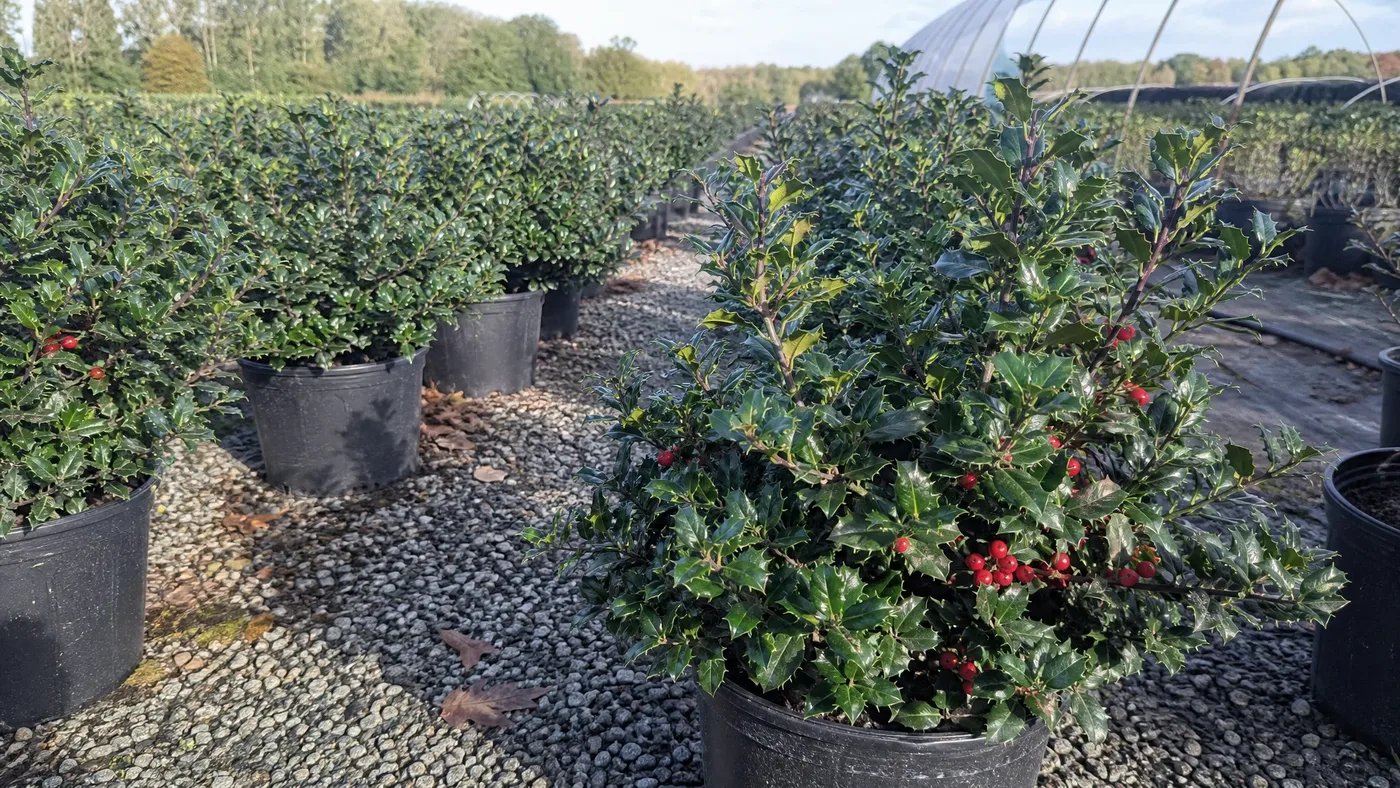
China Girl Holly Tags: Trademark, Patent and Cultivar Name
This season we noticed something in our rows: China Girl Holly tags no longer agree with each other. Some carry ®, some carry ™. Some show 4878, some show PP4,878. Some add a code, 'Mesog', that looks like a different plant. That is one symbol, one number and one code, and each makes a different claim.
Read them wrong and you can pay for a look-alike, or believe a patent still stops you from rooting a cutting in your own yard. Both mistakes are common and both are avoidable. Read on for what the symbol, the number and the code each claim, how to match a tag against an invoice and a public listing, and which lookups to run before you pay.
The Plant Tag as a Three-Part Record
A China Girl Holly tag is a short record, and it has three parts you can verify. Each part answers a different question. None of them tells you how big the plant will get.
What Each Part Claims
The table sets out the three identifiers as the public records print them for this plant.
| Part | How it appears | What it claims | Where to check it |
|---|---|---|---|
| Symbol | ® or ™ after China Girl | The name is a trademark | Trademark search |
| Number | 4878 or PP4,878 | A plant patent was issued on 17 August 1982 | Patent search, plant databases |
| Code | 'Mesog' | The cultivar the plant belongs to | Plant databases, grower invoice |
Both symbols appear in print for the same plant, and some records use ®. Treat a mismatch as a reason to look the name up, not as proof of a fake.
A tag can lose any one of the three and still describe the right plant. Only the code names the plant itself.
What the Tag Does Not Settle
Everything else on the tag is the nursery's own statement, and size is the clearest case.
Cornell lists China Girl as a shrub that grows to 10 feet tall and wide. NC State gives the Meserve holly species 3 to 8 feet tall and 6 to 8 feet wide. A tag that quotes the species range undersells this cultivar. Our China Girl size guide covers growth rate and what to plan for.
Treat size and sun lines as planning notes. Treat the symbol, the number and the code as the record.
What the ® Symbol Claims on a China Girl Holly Tag
The ® next to China Girl is the smallest mark on the tag and the most over-read. It makes one claim, and the claim is about a word.
What ® Does Cover
UF/IFAS Extension explains that trademarked plant names are followed by a small TM, or a small R when the trademark is registered. On this holly the trademarked part is the name China Girl. The name belongs to its owner, so another grower cannot simply print it on a different plant.
A ™ means the owner claims the name. A ® means the claim was registered. If you see ™ on one tag and ® on another, look the name up before you compare prices.
What ® Does Not Cover
The same UF/IFAS page is blunt on the limit: a trademark protects only the plant's name, not the cultivar itself, as a patent would. The symbol says nothing about genetics.
So a mislabeled seedling can be printed with a ®, and a true plant can be sold without one. Some buyers read ® as proof of quality or certification. It is a filing about a word, nothing more.
Treat ® as a prompt to find the code, not a reason to stop looking. The sources we use give a term for the patent but none for the trademark, which is why the two marks on one tag can be in different states. The number may be past its term while the ® still applies.
Plant Patent 4878 and Its Expiry Clock
The number on a China Girl tag is a plant patent number. Patents run on a clock, and this one has stopped.
What Patent 4878 Covers
Patent number 4878 is held by Conard-Pyle Company. The patent is PP4,878, issued 17 August 1982, and Conard Pyle Nursery introduced the plant in 1979. That is three years from introduction to patent.
A plant patent protects the vegetative or asexual reproduction of a cultivar. In practice that means making copies from cuttings. Nurseries growing patented plants also pay a royalty on each plant.
Where the Expiry Clock Stands
Both extension sources give the term as twenty years, and the UVM page calls it non-renewable. Twenty years from filing applies only to applications filed on or after June 8, 1995, and a patent issued in 1982 ran 17 years from issue, so it expired around 1999. Count the term from filing or from issue, and a patent issued in 1982 is long expired.
Confirm the status with your extension service or the patent office record. We are growers, not lawyers.
What Expiry Means for Propagation
A number still printed on a 2020s tag is a record of origin, not a live restriction. China Girl's plant patent (PP4,878) was issued in 1982, before the June 1995 rule change, so it ran 17 years from issue and expired around 1999. Customers usually ask us whether it means they cannot root a cutting. For your own yard, you can. Our cuttings guide shows how.
Resale is a different matter. The name stays trademarked, so rooted cuttings sold as China Girl need the owner's approval. On any plant still under patent, resale needs the owner's approval too.
Why the China Girl Holly Name Is Not the Cultivar
Two names point at one plant. The botanical record uses the second one.
One Plant, Two Names
The University of Illinois record puts it plainly: China Girl is the registered trademarked name for the cultivar 'Mesog'. Written out, the plant is Ilex × meserveae 'Mesog'. It is also printed as Ilex 'Mesog' China Girl™.
The convention is that cultivar codes go in single quotes and trademarked names do not. A tag that writes 'China Girl' in quotes has mixed the two. That is a style slip on the label, so check the rest of the tag before you judge the plant.
Why the Distinction Matters
Catalogs and registries file the plant under its code, while shops sell it under its name. Search only the name and you miss records. Search only the code and you miss the shop pages.
A tag that says only "Meserve holly" or "blue holly" names a species or a group. NC State describes the species as a variable habit from vase-shaped to rounded. The cultivar 'Mesog' is compact, upright-rounded and very heat-tolerant. Only the cultivar code promises that habit.
Conard Pyle introduced it as one of the blue hollies, and our blue holly story covers that background. Other Meserve hollies are also sold under marketing names, so the same check applies. Our China Boy comparison covers the pair.
Matching China Girl Holly Tags Across Three Sources
One tag proves little. A tag, an invoice and a public listing that agree prove a good deal.
Tag, Invoice and Listing
The tag is what the plant carries. The invoice is the grower's record of what shipped, and you should ask that it name the cultivar code. The listing is a nursery product page or, better, a university or arboretum record.
One of the most common questions we get is why the invoice says Mesog when the tag says China Girl. It is the same plant. The invoice carries the code and the tag carries the sales name.
Differences That Pass and Differences That Don't
Some mismatches are harmless. ® against ™, and 4878 against PP4,878, are formatting differences. A tag with the name but no code is fine if the invoice carries 'Mesog'.
Others are red flags. A patent number other than 4878 next to the name China Girl means a different plant. An invoice that reads only "blue holly" gives you nothing to match. A listing that promises 4 feet at maturity does not describe a cultivar that grows to 10 feet.
Do not use parentage as a test. NC State gives English holly × I. rugosa for Meserve hybrids in general.
We ship China Girl with the tag on the plant and the name on the invoice. Our container size guide shows what to expect on arrival.
Tools for Verifying a China Girl Holly Label
Every check below is free and takes a few minutes. Run them before you pay, not after the plant is in the ground.
Plant Databases
The University of Illinois record states the name-to-code link and the patent holder. The Cornell woody plants database gives the cultivar's mature size.
To read a tag, look for a patent number, or PPAF (patent applied for) or PVR (plant variety rights) after the cultivar name. Neither code should follow 'Mesog', because its patent is a granted number.
Patent and Trademark Searches
The US Patent and Trademark Office offers searches for both. Plant patents carry a PP prefix, so search PP4,878 and the name China Girl. The patent record will show an issue date of 1982. The trademark record shows whether the name registration is live.
For anything legal, such as propagating to sell, ask your state extension service first.
Questions for the Seller
Ask three things. What is the cultivar code? Is the number on the tag a current claim or a record? Will the invoice carry the code? A grower who knows the plant answers all three in one reply.
One Tag, Three Codes, Zero Guesswork
A China Girl Holly tag holds one symbol, one number and one code. The symbol protects a name. The number records a 1982 patent whose term has ended, around 1999. The code, 'Mesog', identifies the plant.
Use this sequence on any tag:
- Check the symbol. A ® or ™ after China Girl claims the name only, so it never proves the plant is genuine.
- Check the patent number. It should read 4878 or PP4,878. Propagating for your own yard is fine, but propagating to sell under the name is not.
- Check the cultivar code. 'Mesog' should appear on the invoice or in a listing for the same plant.
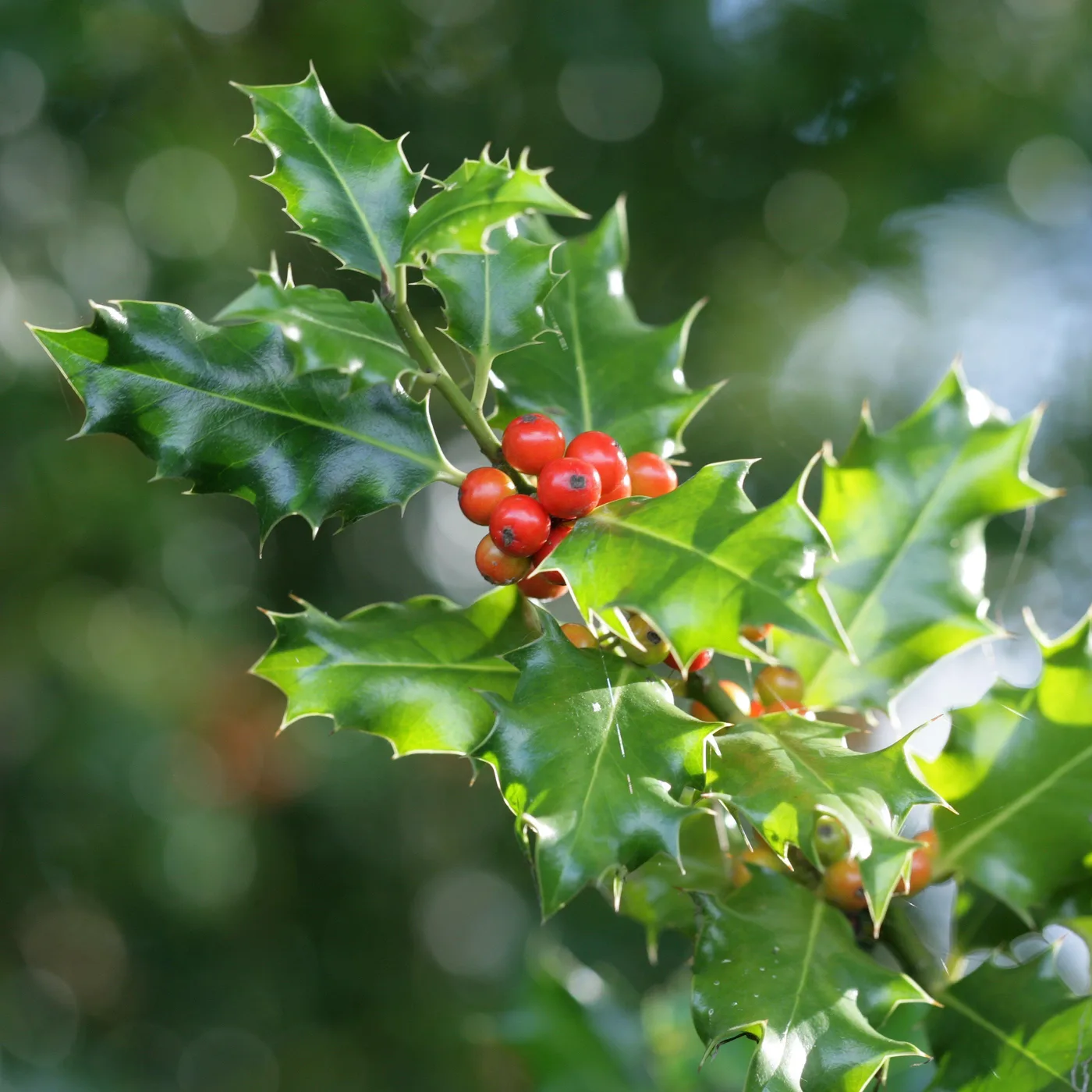
- Look at the plant. You want dark, glossy leaves that are prominently spine-tipped, a compact upright-rounded habit, and red fruit on female plants. Allow room for a shrub that reaches 10 feet tall and wide.
China Girl Holly
Nursery-grown China Girl Holly in sizes from 2 GALLON, shipped to your door.
From $87.99
Shop Now →We are growers with our own farms, and we grow and sell top-quality hollies. Before a plant leaves us, our growers check that the tag, the invoice line and the plant in the pot all describe the same China Girl.