How to Tell Male and Female China Girl Holly Flowers Apart
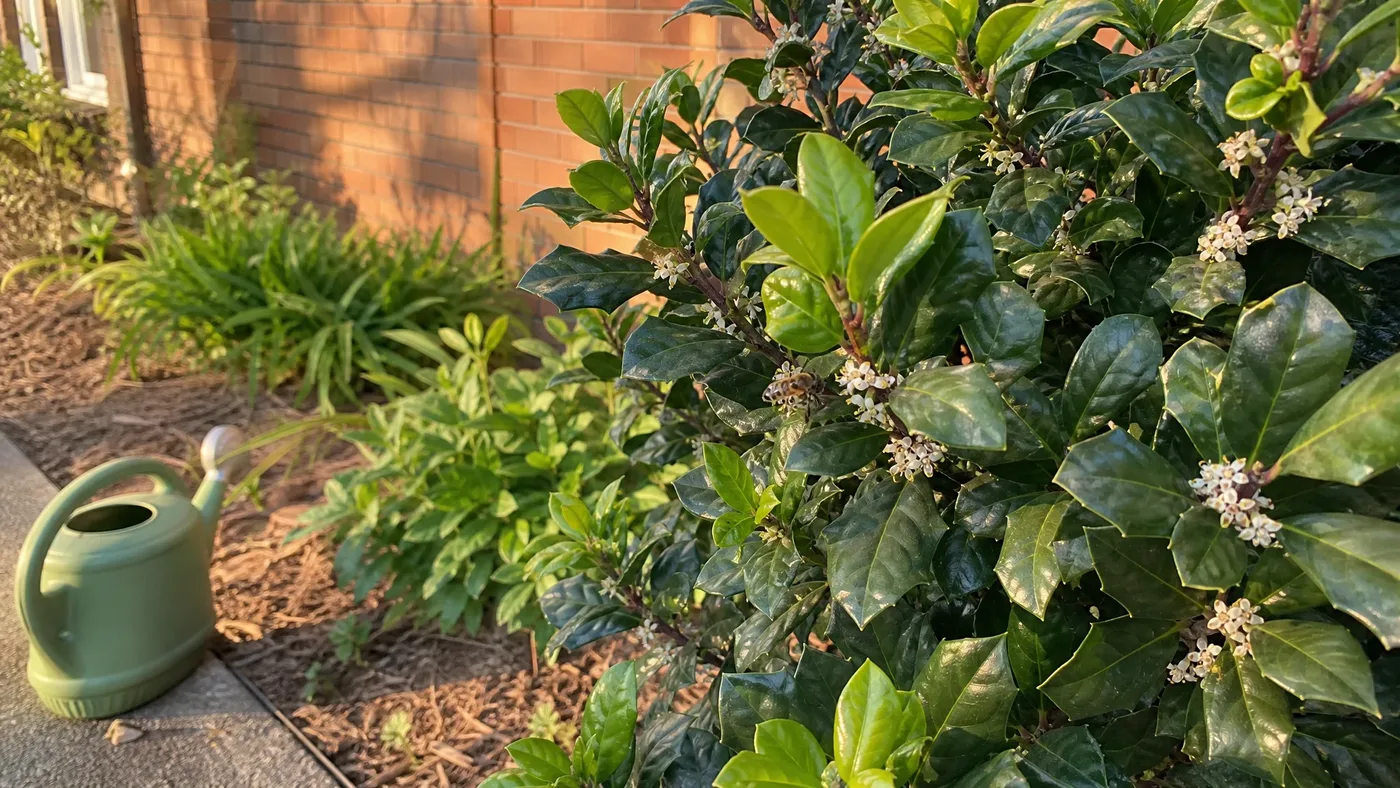
Picture a warm May morning in your yard. Bees are humming around a glossy shrub, working the tiny pale blooms tucked in among the leaves, and most people walk right past without a glance. Those little flowers decide whether your holly carries red berries next winter or none at all.
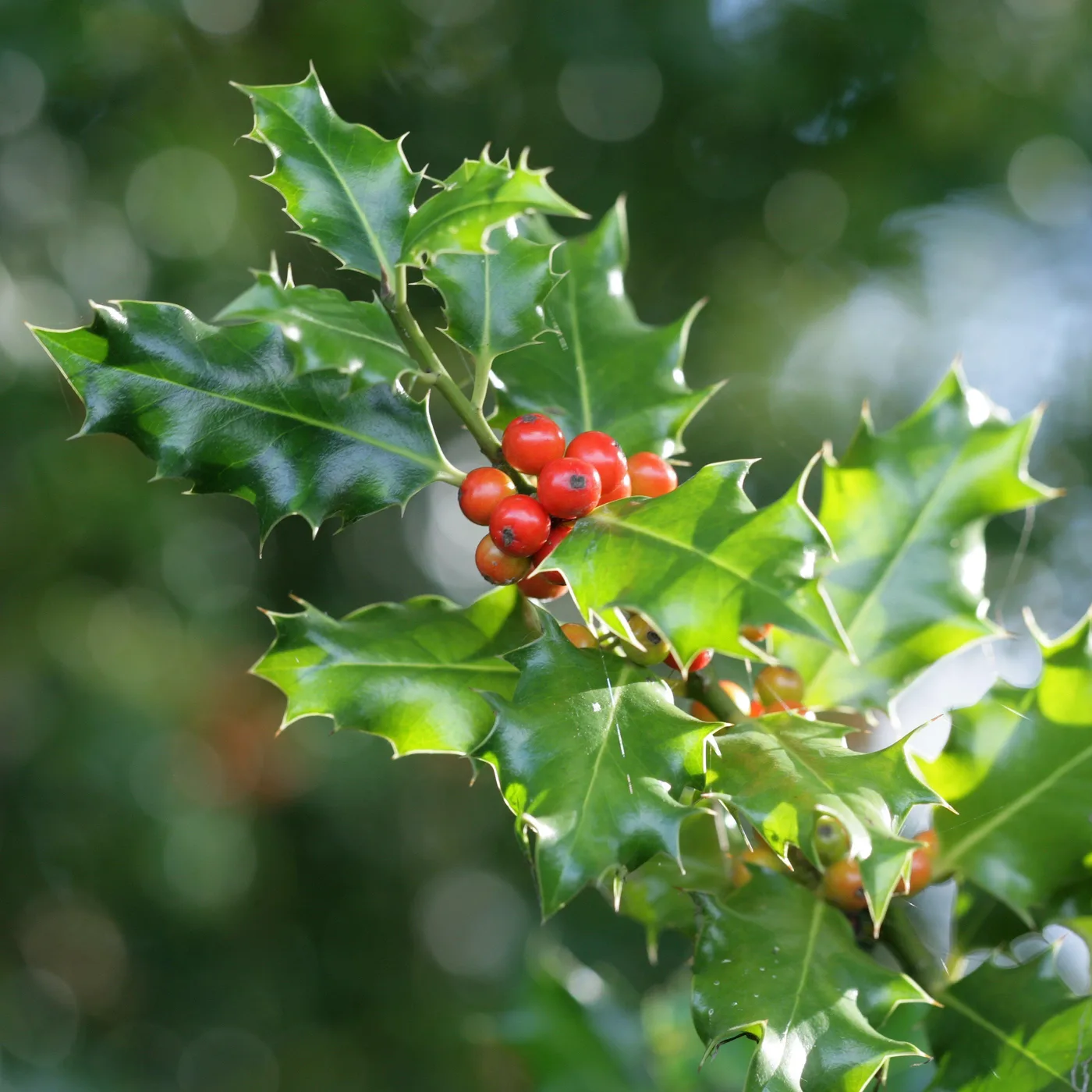
China Girl is a female cultivar, and a female only fruits when pollen arrives from a male plant. Tags get lost and plants get relabeled, so the flower itself is the most reliable proof of what you own. Guess wrong and you can end up with a hedge that blooms beautifully and never sets a berry.
In this article, we'll go through how the sexes divide between plants, what each flower looks like up close, how to examine one properly, and what to do when blooms never turn into berries.
How China Girl Holly Splits Its Sexes Between Plants
Before you look at a single flower, it helps to know how this shrub is built, because everything about fruiting follows from it. Here is the biology in plain terms.
One Sex per Plant
Hollies are dioecious, which means male and female flowers grow on separate plants. A single holly never carries both. China Girl is the female half of the pair. NC State lists the cultivar as female with red fruits and suggests one male for every 3 to 5 female plants.
So fruiting takes two plants: a female with the ovaries and a male with the pollen. Plant a lone China Girl with no male anywhere nearby and you get leaves and flowers but no berries. A plant never changes sex, either. If yours was female this May, it will be female every May after.
Why Leaves and Habit Will Not Settle It
Both sexes are slow-growing evergreen shrubs with dark, glossy, spine-tipped leaves, so a glance at the shrub tells you very little. China Girl is compact and upright-rounded, and Cornell lists it at 10 feet tall and wide. Shape and leaf color are weak clues to sex at best.
The flowers are where the sexes plainly differ. They open on last year's wood for roughly 2 to 3 weeks in mid-to-late spring, and that is your window each year. Common advice says to wait for berries to find out which plant is which. We would rather you know in May, because waiting for October costs you a whole season.
What a China Girl Holly Bloom Is Really For
The spring flowers are not decoration. They are the only way this holly makes the red fruit you plant it for, and once you see that job, the structure of each flower is easier to read.
Small, Pale and Easy to Miss
Meserve holly flowers are white to pinkish-white, and Iowa State Extension notes that the flowers of all hollies are small and inconspicuous. Against dark foliage they read as a faint pale haze, not a show. The steady traffic of bees is often the first thing that tells you where to look.
Bees Carry the Pollen
A male flower produces pollen. A female flower holds the ovary that can turn into a berry. They sit on different shrubs and cannot reach each other on their own, so bees do the delivery. A bee lands on one flower, brushes against it and carries grains to the next.
That explains why a cold, wet spell during bloom can cost you fruit even when both sexes are planted. The bees stay home and the short window closes. It also explains the placement rule: the male has to stand in the same general area as the females, and one male usually serves several. A bee that works the male this morning has to find your female before the blooms fade.
Peering Into a Female China Girl Holly Bloom
A female flower has one feature the male lacks, and it sits right in the middle. Learn to spot that center and you can sort most flowers in seconds.
The Swollen Green Center
Look at the heart of the flower first. A female bloom has a small, plump, green ovary, usually described as bead-shaped, standing in the middle. Think of a tiny green bud sitting inside the pale petals. It is the part that matters, because it is the future berry.
Stamens That Do Not Deliver
Around the ovary you will see stamens, the slender parts that carry pollen sacs on their tips in a male. On China Girl they are present but non-functional. They look thinner and paler than a male's, and the tips do not shed a dusting of pollen. Do not let their presence fool you into calling the flower male. The ovary decides it.
What the Ovary Becomes
If pollen arrives, the ovary swells and the flower becomes a berry. Those fruits ripen to red in fall and hang on into spring, which is the main reason people grow the female. If no pollen arrives, the ovary simply fails. That is the quiet reason a healthy China Girl can flower heavily and still look bare by autumn.
The Pollen-Heavy Face of a Male Flower
Now turn to the pollinator. A male holly such as China Boy has a very different face, and once you have seen both you will not mix them up.
Four Stamens Loaded With Pollen
A male flower shows four prominent stamens standing around the middle, each topped with an anther full of pollen. Under a lens the tips look slightly fuzzy or dusty, and a gentle tap over a dark surface can release a fine powder. The whole flower looks busier and more crowded than a female, because the stamens are the main feature.
No Ovary, No Fruit
The center is the giveaway. Where a female has a swollen green ovary, the male has nothing of the kind. Its center looks flat or empty, because it never makes fruit. That is not a flaw. A male's job is to supply pollen, and it will never bear a berry no matter how well you care for it.
If you are comparing the two cultivars as whole plants, our guide to China Boy versus China Girl covers size, habit and bloom timing in detail. The flower check in this guide is the quickest way to confirm which one is actually in front of you.
Hand Lens, Good Light, Steady Patience
These flowers are small, so a good look takes a little setup. One of the most common questions we get is whether a tagless holly is a boy or a girl, and the answer is almost always in the flower.
Gather Your Kit and Pick Your Moment
You need an inexpensive hand lens or jeweler's loupe, a sheet of white paper or card, and your phone for photos. Choose a dry, bright mid-morning once the dew is off. Flowers are fully open then, the bees are working, and the light is clean enough to show color and shape.
Examine the Flower Step by Step
Work through this checklist on each shrub you want to check.
- Find a branch on last year's wood in mid-to-late spring, once several flowers have opened fully.
- Stand so the sun falls on the flower without glare, or step into bright shade.
- Hold the white card behind the bloom so the center stands out.
- Bring the lens close to your eye, then move the flower toward it until it comes into focus.
- Look at the center first. A swollen green bead is an ovary and means female. A flat center means male.
- Check the stamens. Four pollen-dusted tips around a flat center mean male. Thin, pale, pollen-free ones around an ovary mean female.
- Repeat on flowers from at least three branches, then photograph one and label the plant with a durable tag.
Give It Time
Buds that have not opened show you little, and flowers that are fading lose their detail. Return over several days and compare flowers at different stages. Patience matters more than magnification here, because the clear view lasts only part of that 2 to 3 week window.
When Your China Girl Holly Blooms but Never Fruits
Now use what you have learned. If your shrub flowers every spring and carries no berries in fall, work through the likely causes in order. We often see hedges of all-female plants that bloom heavily and never fruit.
Match the Symptom to the Cause
This table pairs what you see with the usual reason and the next step.
| What you see | Likely cause | Next step |
|---|---|---|
| Flowers with a green ovary, no berries | No male close enough, or bees missed the window | Look for male hollies nearby, then add one |
| Flowers with dusty stamens and no ovary | The plant is male, or it was mislabeled | Treat it as your pollinator and buy a true female |
| Few flowers at all | Pruning removed last year's wood, or the plant is young | Prune only after bloom and read our pruning guide |
| Berries on one side only | Uneven pollination | Move the male closer or add a second one |
The second row catches the most surprises. If you thought you had a female and the flowers say otherwise, you may have no fruiting plant at all.
Add a Pollinator the Right Way
Pick a compatible male such as China Boy and plant it in the same general area as your females. One male usually covers several females, so you rarely need more than a single plant. Choose one that blooms in the same weeks as your China Girl, or the pollen will be gone before the ovaries are ready.
Our guide on whether China Girl needs a male pollinator covers pairing and distance at length. If other problems are mixed in, 7 common China Girl problems will help you sort them. Expect berries the fall after a successful bloom, since fruit follows pollination by months.
Two Small Flowers, One Clear Difference
Carry one contrast outdoors. The female flower has a swollen green ovary at the center and stamens that do not work. The male flower has four pollen-heavy stamens and no ovary. Check the center first, confirm with the stamens, and you will know the sex of any holly in bloom.
China Girl Holly
Nursery-grown China Girl Holly in sizes from 2 GALLON, shipped to your door.
From $87.99
Shop Now →Next bloom season, go outside on a warm morning, bring your lens and look closely. It is a small show, but it is a lovely one, and it tells you exactly what your plants will do. Every China Girl we ship is potted, packed and shipped so it arrives ready to plant, because as growers with our own farms we want yours to flower, fruit and look good for years.