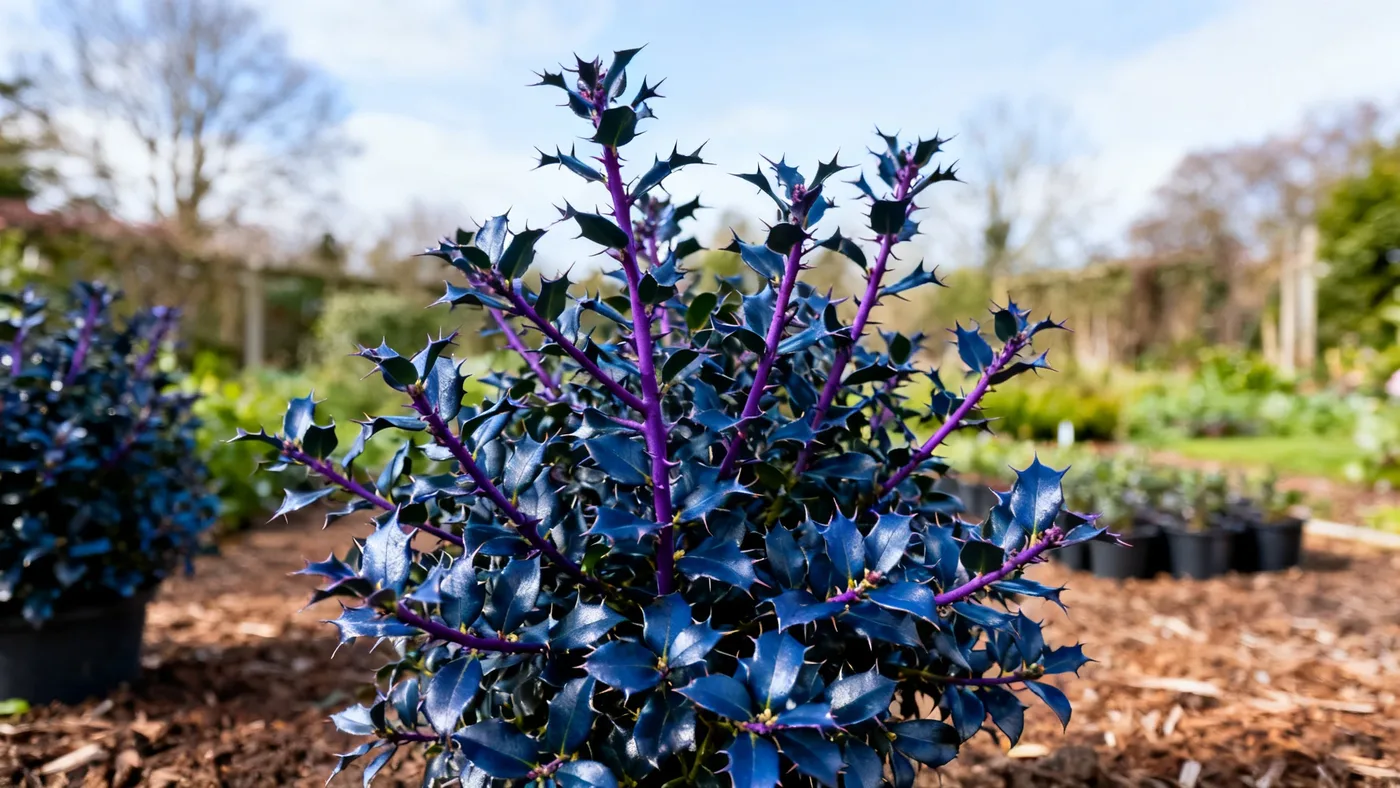
China Girl Holly Sun Requirements: Full Sun or Shade?
China Girl Holly grows best in full sun to part shade, with a clear preference: full sun delivers the densest foliage and most prolific berries, making it the target for most home gardeners. If you're planting in a shadier spot or an exposed site, understanding how light affects this evergreen shrub will help you set realistic expectations and choose the right planting location.
Understanding Light Categories for China Girl Holly
Before assessing your yard, nail down what "full sun" and "part shade" actually mean. These terms matter because China Girl Holly performs differently in each.
Full sun: At least 6 hours of direct, unobstructed sunlight per day. Morning sun (east and southeast exposure) is ideal; afternoon sun (west exposure) also works but can increase water demand during hot spells. In full sun, your plant develops the darkest blue-green foliage, branches more densely, and produces the most berries when a male pollinator like China Boy Holly is nearby.
Part shade: 3 to 5 hours of direct sun, or dappled light (such as beneath a deciduous tree that leafs out in summer). Your China Girl Holly will still grow and flower, but slower. Foliage may be slightly lighter or sparser. Berry production drops noticeably compared to full-sun plants, especially if you rely on this shrub for winter garden color or wildlife food.
Deep shade (less than 3 hours of direct sun): Not recommended. Growth will slow even more, branching becomes sparse, and berry production may be minimal or absent.
Assessing Your Planting Site
Take time to observe your yard before you dig. Spend 10 to 15 minutes with a notepad, tracking sunlight at different times of day. Early morning and late afternoon shadows shift as seasons change, so if possible, scout your site across two or three different days, at least one of them in a different season.
Step 1: Identify Cardinal Directions
Know which way your site faces. Use a compass on your phone or observe where the sun rises and sets relative to the spot. North-facing sites are shadier year-round. South-facing sites are sunnier. East and west faces are in between, though west can get intense afternoon heat.
Step 2: Note Overhead Obstacles
Look up. Are there trees, roof eaves, or tall structures casting shade? Check whether they shed leaves in winter (deciduous) or keep them year-round (evergreen). A deciduous oak might shade your China Girl Holly in July but let full sun through in February, which is actually useful since the plant is in its quiet winter dormancy.
Step 3: Track Sun Duration
If you're on the fence between full sun and part shade, count hours. Place a stake in the proposed planting spot and mark its shadow at 9 a.m., noon, and 3 p.m. on a sunny day. The shadow's movement shows you real sun exposure. Aim for at least 6 hours if you want vibrant berries; 4 to 5 hours is the bare minimum for a healthy plant.
Step 4: Assess Wind and Reflected Heat
China Girl Holly tolerates coastal wind and salt spray well, but in exposed, windy sites it can develop winter leaf scorch (browning on the windward side). If your site is very exposed and lacks wind breaks, part shade from a fence, evergreen windbreak, or taller plantings nearby will help protect foliage in harsh winters. Conversely, full-sun sites against dark walls or pavement reflect heat in summer; you may need to water more frequently in these spots.
Planting Instructions for Sun Optimization
For Full-Sun Sites (Best Choice)
Materials needed:
- China Girl Holly shrub (usually sold in a #1 or #3 container)
- Well-drained, humusy soil (amend as needed)
- Mulch (wood chips or shredded bark, 2 to 3 inches)
- Shovel and watering can
- China Boy Holly or another male Ilex pollinator (optional but recommended for berries)
Planting steps:
- Dig a hole as deep as the root ball and 1.5 to 2 times as wide. In full sun, roots dry out faster, so slightly wider planting gives them room to spread and access water.
- Amend the soil if yours is compacted clay or pure sand. Mix in compost or peat to create a humusy, well-drained bed. China Girl Holly prefers acidic to neutral soil (roughly 5.0 to 6.5 pH); if your soil is alkaline, amend with sulfur or use an acid-loving plant fertilizer at planting.
- Position the shrub so the top of its root ball is level with the ground. Don't plant it deeper; shallow planting in full sun ensures the root zone doesn't stay waterlogged.
- Backfill and water thoroughly. Tamp gently to eliminate air pockets. Water until the soil settles and is moist 3 to 4 inches deep.
- Mulch out to the dripline (the edge of the canopy when mature). A 2- to 3-inch layer of wood chips conserves moisture and moderates soil temperature, especially valuable in full-sun locations that can dry out quickly.
- Water deeply every 2 to 3 days for the first 4 weeks while the plant establishes roots. Thereafter, water every 5 to 7 days during the growing season unless rain falls. Even though China Girl Holly becomes moderately drought tolerant once established, consistent moisture in the first year pays dividends.
- Install a pollinator nearby. If your goal is berries, plant a China Boy Holly or another male Ilex (such as Blue Boy or Blue Prince) within 50 feet. Bees will cross-pollinate, and you'll get the showy red berries that persist through winter.
For Part-Shade Sites (Supplementary Positioning)
Materials needed:
- China Girl Holly shrub
- Well-drained, humusy soil
- Mulch (2 to 3 inches)
- Shovel and watering can
Planting steps:
- Choose a spot with morning sun if possible. East and southeast exposures warm the plant early and dry dew, reducing fungal leaf spot. Afternoon shade (especially in hot regions within zones 8 to 9) prevents leaf scorch.
- Dig a hole at the same depth and width as for full-sun sites. Don't compensate by planting deeper; even in shade, proper drainage matters.
- Amend soil for drainage. Part-shade sites often accumulate moisture. Make sure your soil drains well: mix in compost or peat and test the hole by filling it with water; it should drain within a few hours.
- Position and water as above. Mulch to 2 to 3 inches. Water every 3 to 5 days for the first 4 weeks; part-shade sites dry out more slowly, so don't overwater.
- Accept that berries will be lighter. Part-shade plants flower and set fruit, but less reliably and in smaller quantities than full-sun plants. Plan for attractive green foliage rather than heavy berry production as your primary garden asset.
Tips for Maximizing Light Exposure
Thin surrounding plants. If your China Girl Holly is in part shade because of nearby shrubs or trees, selective thinning of neighboring branches (especially lower, interior twigs) can increase light penetration without removing the overstory entirely.
Choose a high-visibility spot. If you're planting for berry color, position the shrub where morning or afternoon sun lights it directly. Berries on a north-facing side of a plant tend to be less vivid than those receiving direct sun.
Avoid dense shade from conifer evergreens. While deciduous shade trees (oak, maple) work fine, dense evergreen conifers shade year-round and may create dry, root-choked conditions. Full sun or dappled light from deciduous trees is preferable.
Protect from intense afternoon sun in hot zones. If you're in zones 8 or 9, afternoon shade from a fence, pergola, or taller plants helps prevent leaf scorch during heat spikes, especially in the first two years after planting.
Common Mistakes to Avoid
Planting in deep shade and expecting berries. If your site gets less than 3 hours of direct sun, your China Girl Holly will grow (zones 5 to 9 are hardy enough), but berry production will be sparse or absent. Reposition the shrub or accept foliage-only display value.
Underestimating winter wind exposure. Full sun in an open, wind-swept location can cause winter leaf scorch, where foliage browns on the windward side. If your site is very exposed, plant on the lee side of a fence or windbreak, or choose part shade to buffer harsh conditions.
Planting too deep in full sun. Roots suffocate and rot if the planting hole is too deep. Keep the root ball crown level with the ground line, even in sunny sites where you might think deeper would conserve moisture.
Neglecting the first-year watering regimen. Full-sun plants dry out faster. Skipping regular water in the establishment phase (first 4 weeks to first year) is the leading cause of poor root development and shrub decline.
Spacing plants too close. For hedges or screens, space China Girl Holly 6 to 8 feet apart. Crowding blocks light from reaching lower branches, increases fungal disease risk, and wastes the shrub's natural form.
Expected Results and Timeline
In full sun, you can expect dense, dark blue-green foliage to fill in within 2 to 3 years. Growth rate is slow to moderate, roughly 6 to 12 inches per year once established. Berries (assuming a male pollinator is present) usually appear within a few years of planting and become more prolific as the plant matures. In part shade, growth slows by 25 to 50 percent, and berry set may be lighter or sporadic.
Winter interest (persistent red berries on glossy evergreen foliage) is the plant's main draw; positioning it in visible full sun maximizes that display value.
Quick Reference: Sun Requirements Checklist
| Condition | Hours of Sun | Foliage Density | Berry Production | Planting Notes |
|---|---|---|---|---|
| Full Sun (Best) | 6+ hours direct sun | Dense, dark blue-green | Abundant (with pollinator) | Water regularly year 1; mulch; position pollinator nearby |
| Part Shade (Good) | 3-5 hours direct or dappled | Moderate, lighter green | Light to moderate | Ensure drainage; morning sun preferred; accept reduced berries |
| Deep Shade (Not Recommended) | <3 hours direct sun | Sparse, pale | Minimal to none | Growth slows; consider repositioning or choosing a different shrub |
| Exposed/Windy (Full Sun) | 6+ hours, no wind shelter | Dense but with potential winter scorch | Abundant | Plant on lee side of fence or windbreak to prevent leaf browning |
For more care details, visit our complete China Girl Holly growing guide.