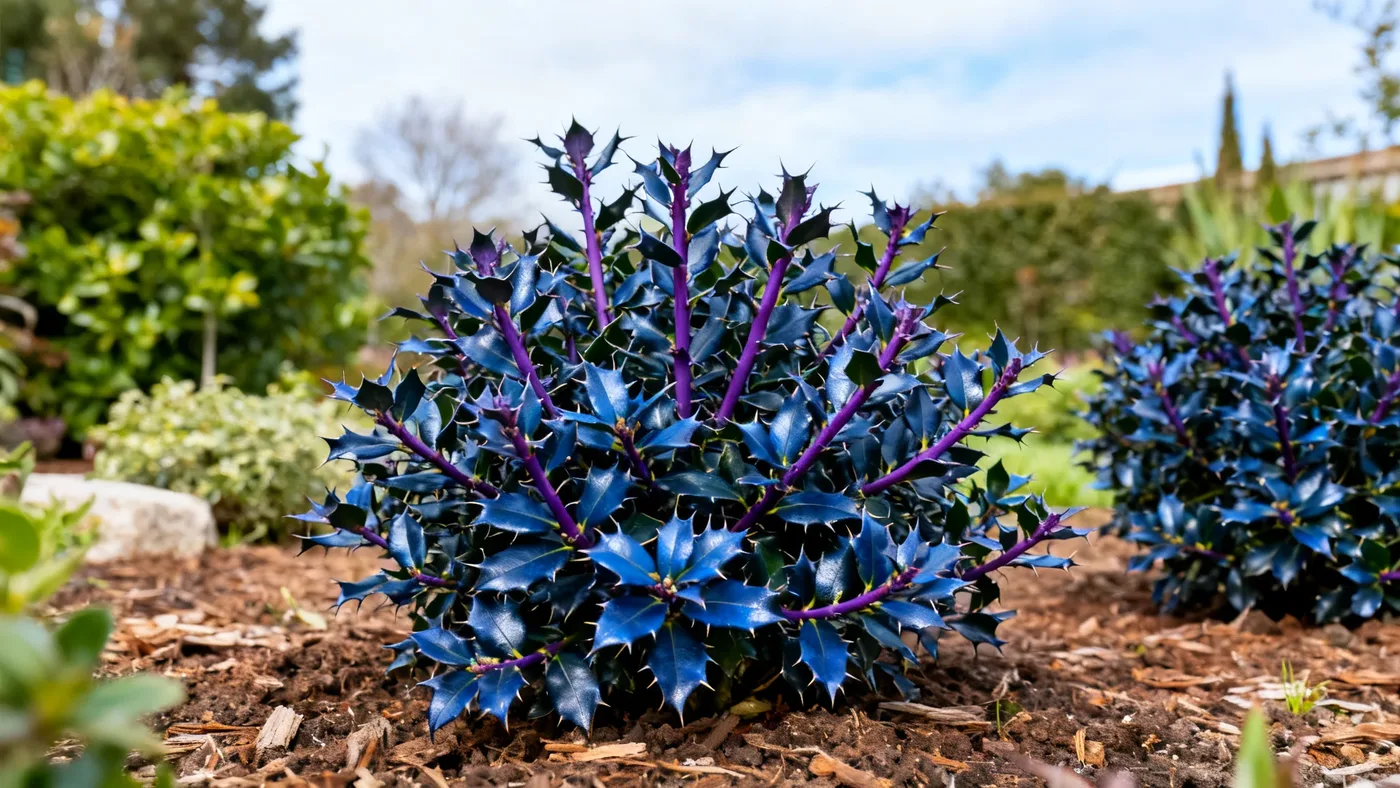
Fertilizing China Girl Holly: What, When and How Much
China Girl Holly grows at a modest pace, roughly 6 to 12 inches per year once established, which means it doesn't demand heavy feeding. In fact, overfeeding can do more harm than good. A light annual application of the right fertilizer, timed correctly, keeps your shrub healthy and puts energy into foliage and berries rather than wasting it on excessive growth.
This guide covers exactly what to apply, when to apply it, and how much your China Girl Holly actually needs to thrive.
Understanding What China Girl Holly Needs
China Girl Holly is an acid-loving evergreen shrub. Unlike plants that tolerate a wide pH range, it performs best in acidic to neutral soil, roughly 5.0 to 6.5 on the pH scale. If your soil leans alkaline (7.5 and above), chlorosis, yellowing of the leaves despite green veins, can appear. The right fertilizer helps maintain soil acidity and supplies the micronutrients (iron, manganese, magnesium) that prevent this problem.
The best fertilizer for China Girl Holly is labeled for acid-loving plants or evergreen shrubs. Look for products formulated specifically for:
- Holly
- Acid-loving shrubs
- Broadleaf evergreens
- Rhododendrons and azaleas (these prefer similar soil chemistry)
These fertilizers typically have a formula skewed toward iron and other micronutrients, and they don't include limestone, which would raise soil pH.
Avoid all-purpose lawn fertilizers and general-purpose shrub feeds. They often contain filler ingredients and may not address the plant's acid-loving nature. If your soil is already acidic and your China Girl Holly is thriving, a dilute feeding is enough. If your soil is neutral or slightly alkaline, an acid-forming fertilizer becomes even more important.
When to Fertilize China Girl Holly
Timing is everything. China Girl Holly should receive a light annual feeding in early spring, just as new growth begins to emerge. This coincides with the plant's active growth window and gives it a boost when it most needs nutrients.
Why early spring specifically? At this point:
- Days are lengthening and temperatures are climbing
- New shoots are pushing out
- Root activity is increasing after winter dormancy
- The plant can use the nutrients immediately, rather than storing them when growth is slowed
If you fertilize too late in the growing season (mid-summer onward), you risk stimulating tender new growth that frost could damage when fall approaches. Fertilizing in fall or winter wastes nutrients because the plant isn't actively growing.
Container-grown China Girl Holly (the most common nursery form, sold in #3 containers and smaller) can benefit from a second, lighter feeding in mid-summer if it's in a pot, since containers drain nutrients faster than in-ground soil. If your shrub is in the ground, stick to one spring application.
How Much to Apply: A Step-by-Step Guide
Step 1: Test Your Soil (Optional but Recommended)
Before you apply anything, know what you're working with. A soil test from your local extension service reveals your current pH, nutrient levels, and whether your soil is naturally acidic or alkaline. This takes the guesswork out of fertilizing.
If your soil tests between 5.0 and 6.5 and the plant looks healthy, a minimal annual feeding is all you need. If your soil is above 6.5, choose an acid-forming fertilizer to help bring pH down gradually.
Step 2: Choose Your Fertilizer Rate
Follow the label instructions for your chosen product, but interpret them conservatively. Labels often assume heavy-feeding ornamentals. China Girl Holly, being a slow-to-moderate grower, thrives on half to three-quarters of the standard rate.
For a mature China Girl Holly (8 to 10 feet tall, well established in the ground), a typical application might be:
- 1/2 to 1 cup of granular acid-loving shrub fertilizer per plant, OR
- 2 to 4 tablespoons of balanced liquid fertilizer per gallon of water, applied as a soil drench
For container-grown younger plants, reduce this by half.
Step 3: Prepare the Area
Clear away mulch or leaf litter from directly around the base of your shrub. You want the fertilizer to contact soil, not sit on top of bark or leaves. Clear away about 3 to 4 inches from the base in all directions.
Step 4: Apply Granular Fertilizer (If Using)
Sprinkle the granular fertilizer evenly over the cleared area, keeping it 6 to 8 inches away from the main stems. Work it gently into the top inch of soil with a hand cultivator or hoe.
Water thoroughly after application. This dissolves the granules and carries nutrients down to the roots. Water deeply, about 1 inch of water, as you would for a regular watering.
Step 5: Apply Liquid Fertilizer (If Using)
Dilute liquid fertilizer according to label directions. Pour the solution slowly around the drip line (the outer edge of the plant's canopy), avoiding the base of the stems. Use a gentle stream to prevent splashing and erosion.
Apply enough to wet the soil to a depth of 6 to 8 inches. For a mature shrub, this usually means 1 to 2 gallons of diluted solution.
Step 6: Return Mulch and Water Again
Once the fertilizer has been worked in and watered, return your mulch layer (2 to 3 inches of wood chips or bark) around the base. Mulch conserves moisture and moderates soil temperature. Water once more lightly to settle everything.
Common Mistakes to Avoid
Over-fertilizing. This is the number-one error. More fertilizer does not speed growth; it can scorch roots, promote excessive soft growth, and create nutrient imbalances. Stick to the label rate or go lighter.
Fertilizing in late summer or fall. New, tender growth triggered by late-season fertilizer is vulnerable to frost damage. Stick to early spring only.
Applying fertilizer directly to stems. Granules or liquid concentrate against the stems can burn bark. Always keep fertilizer several inches away from the base.
Using lime-based or alkaline fertilizers. These work against your China Girl Holly's preference for acidic soil and can worsen chlorosis over time.
Forgetting to water after application. Dry granular fertilizer sitting on the soil surface does little good. Water is essential to activate nutrients and carry them to roots.
Ignoring soil pH. If your soil is alkaline and you don't address it, even the best fertilizer will have limited impact. An acidifying fertilizer helps, but a soil amendment like sulfur might be needed in stubborn cases.
What Results Should You Expect?
You won't see dramatic changes overnight. China Girl Holly is a slow grower by nature, and fertilizer won't change that. What you may observe after a season or two of consistent spring feeding:
- Deeper blue-green foliage color (especially if iron deficiency was present)
- Denser branching and fuller overall shape
- More reliable flowering and berry set (on pollinated female plants)
- More vigorous new growth in spring
If the plant is already thriving and showing no signs of yellowing or slow growth, a minimal feeding is preventive and maintains the status quo. Don't expect the plant to suddenly shoot up 2 feet per year; that's not its nature.
If your China Girl Holly shows yellowing leaves with green veins after fertilizing, that suggests ongoing soil alkalinity. In this case, a sulfur soil amendment (applied separately, per package directions) may be needed alongside your acid-loving fertilizer.
Quick Reference: China Girl Holly Fertilizing Checklist
| Task | Timing | Details |
|---|---|---|
| Soil test | Before first application (optional) | Confirms pH; guides future choices |
| Choose fertilizer | Any time | Acid-loving or evergreen shrub formula only |
| Spring application | Early spring (before new growth) | 1/2 to 1 cup granular per established plant (in-ground); half this for containers |
| Container plants | May add light mid-summer feed | If in pot; skip if in-ground |
| Watering | Immediately after feeding | Deep watering activates granules or dilutes liquid |
| Avoid | Never fertilize mid-summer onward | Risks tender growth and frost damage |
| Mulch | After watering | Maintain 2 to 3 inch layer, 6 inches from stems |
For more detailed care information, including watering, pruning, and seasonal maintenance, see the complete growing guide for China Girl Holly.